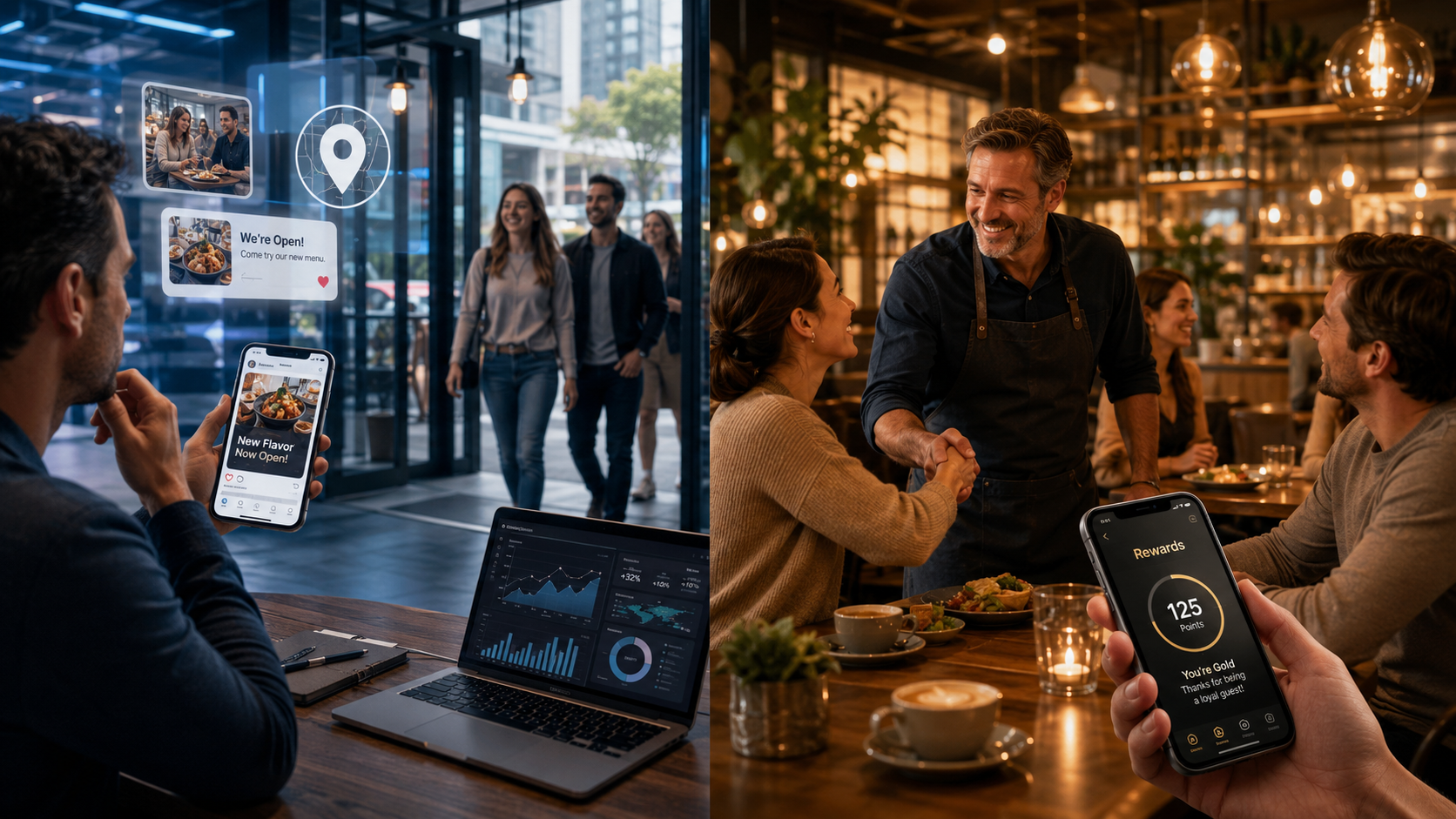
Email open rates for restaurants hover around 20%. Text messages get opened 98% of the time, usually within minutes. For a business where timing is everything — lunch is happening now, the slow Tuesday is tonight — that immediacy is the whole game. SMS is the most direct line you have to a hungry customer. Most restaurants either don't use it or misuse it. Here's how to do it right.
Earn the opt-in, then respect it
SMS only works because it feels personal. Burn that trust and people unsubscribe instantly. Two rules keep you on the right side:
- Always get explicit consent. Collect opt-ins at the counter, in the app, at checkout — and make it genuinely optional. A compliant list is a list that converts.
- Send less than you think you should. One well-timed message beats five forgettable ones. If every text is worth opening, people keep reading.
The four messages that actually drive orders
You don't need a content calendar. You need a handful of triggered messages that fire at the right moment:
- The lunch-window nudge. A single text at 11:15am — "Today's special is ready, order ahead and skip the line" — reaches people exactly when they're deciding where to eat.
- The win-back. A regular who's gone quiet for two weeks gets a reason to return. This one message recovers more revenue than any promotion you'll run.
- The birthday reward. Automatic, personal, and it converts — people use birthday offers, and they bring friends.
- The slow-day filler. Monday and the 2–5pm dead zone are your most expensive empty hours. A targeted offer to nearby regulars turns fixed costs into orders.
Notice none of these are "blast 20% off to everyone." They're specific, timed, and tied to a moment.
Make it one tap to act
A text that drives an order has to remove every step between reading and ordering. The message links straight into your app or ordering page, the customer's saved payment is one tap away, and the whole thing takes ten seconds. If acting on your text requires a phone call or hunting for your website, you've lost most of the intent you just created.
Automate it or it dies on the vine
The reason most restaurants don't do SMS well is simple: nobody has time to manually text customers during service. So it has to run itself. Set the triggers once — lunch window, win-back threshold, birthday, slow-day segment — and let the system send the right message to the right person at the right time, every day, without you touching it.
Done that way, SMS becomes a quiet, compounding revenue channel: 98% of your customers see it, a meaningful share act on it, and you own the entire list.
Book a demo to see how Menuro's automated SMS campaigns would work for your restaurant.