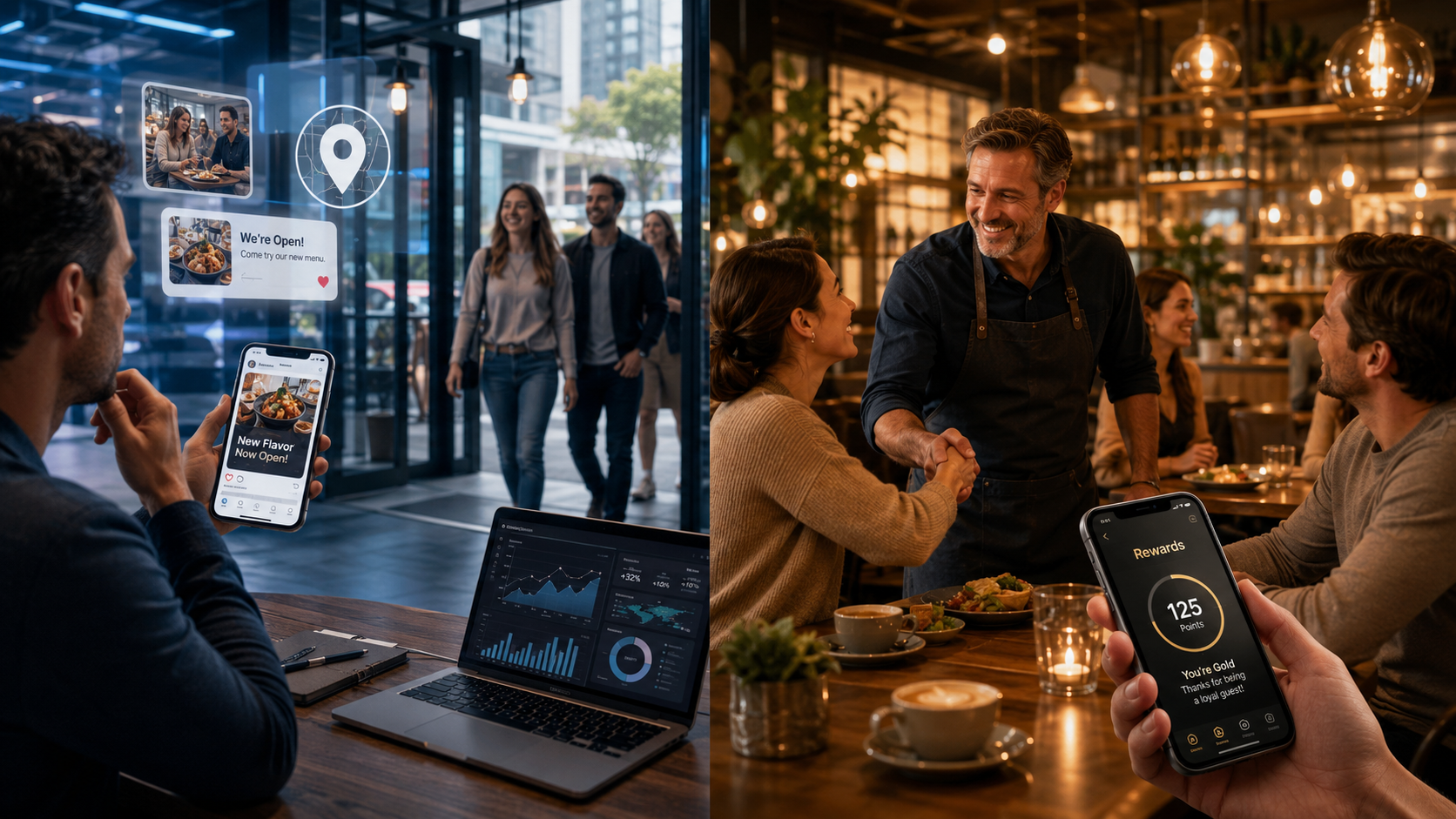
Most independent restaurants lose roughly 60% of their first-time customers — people who came once, had a perfectly good meal, and simply never came back. Not because anything went wrong, but because nothing pulled them back. A loyalty program is the cheapest tool you have to fix that. The catch: most loyalty programs don't actually change customer behavior. They just hand discounts to people who were already coming.
Here's how to build one that earns its keep.
Points are the mechanic, not the strategy
"Earn a point per dollar" is fine plumbing, but points alone don't create habits. What creates habits is a clear next reward the customer can picture and a reason to come back sooner than they otherwise would. The programs that move the needle share three traits:
- The first reward is reachable in two or three visits, not ten.
- Progress is visible every time the customer opens your app.
- The reward feels like found money, not a coupon they had to work for.
If a new customer can see "you're 80 points from a free drink" on their second visit, you've turned a one-time transaction into a reason to return this week.
The prepaid wallet is the underrated lever
The single highest-leverage loyalty feature most restaurants ignore is the prepaid balance — the Starbucks model. A customer loads $50, earns bonus points on that balance, and now has a reason to choose you over the place next door: their money is already with you.
Two things happen at once:
- You pull revenue forward. Cash in the door today, redeemed over the next month.
- You lock in intent. A loaded balance is a commitment device. People spend it.
A bonus-points multiplier on prepaid spend (say, 2× points on wallet purchases) makes the math obvious to the customer and the loyalty automatic.
Automate the win-back, or it won't happen
The most valuable loyalty message you'll ever send is the one that goes out when a regular stops showing up. If someone who came twice a week hasn't ordered in 14 days, that's a signal — and a well-timed "we miss you, here's a reason to come back" recovers a meaningful share of them.
The problem is you'll never catch it manually during a lunch rush. This has to run on autopilot: the system watches frequency, notices the drop, and sends the nudge without you lifting a finger.
What "good" looks like in the first 90 days
Restaurants that get loyalty right tend to see, within a quarter:
- ~40% more repeat visits from enrolled customers
- Higher average order value — loyalty members spend more per visit
- A customer list they own — every phone number, every order, exportable and theirs
None of that requires a bigger ad budget. It requires capturing the relationship at the counter, giving people a reachable reason to return, and letting automation do the follow-up.
The next customer who walks in is the cheapest one you'll ever acquire again — if you give them a reason to come back before they forget you exist.
Book a demo to see how a Menuro loyalty program would work for your restaurant.