
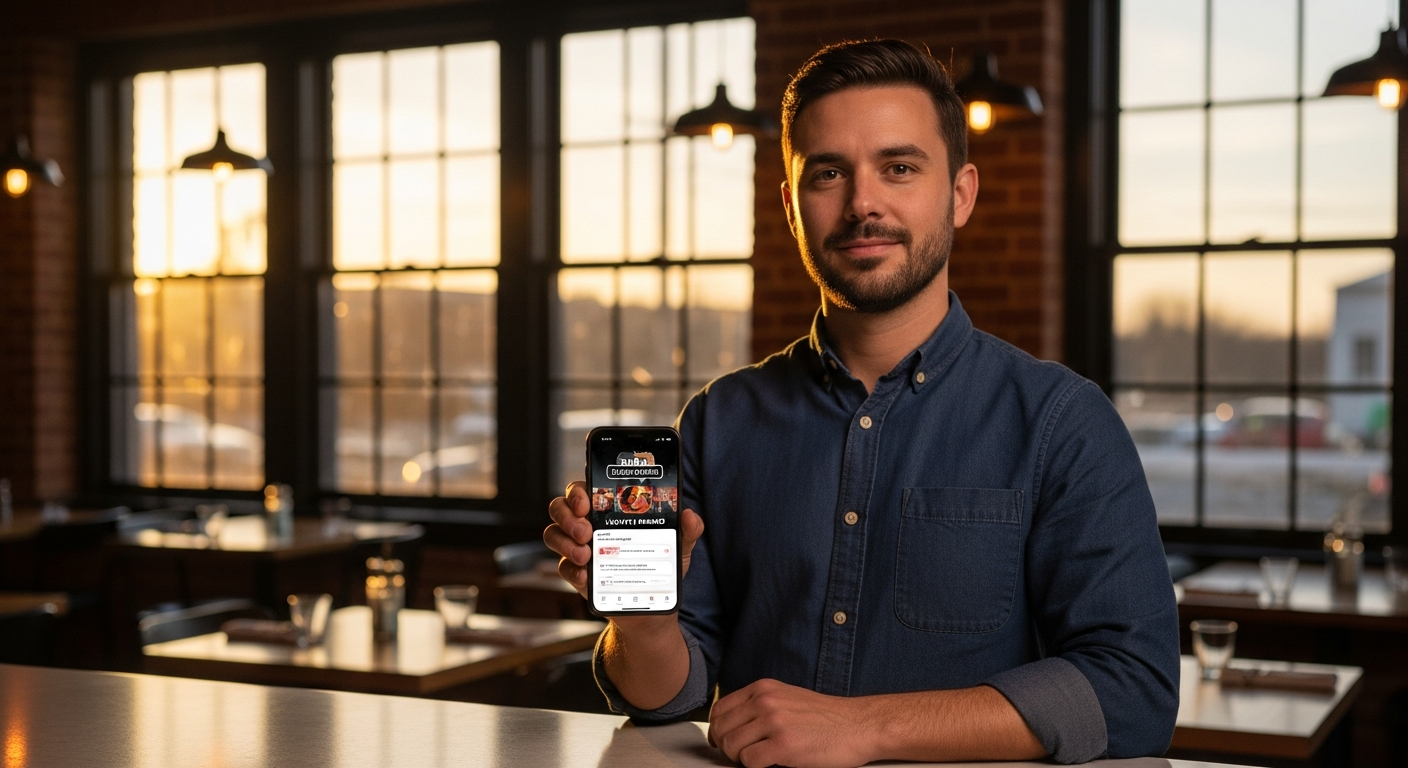
It's a Tuesday night. Your kitchen just crushed a dinner rush — 47 delivery orders in two hours. You should feel great. Instead, you pull up your DoorDash statement and watch $2,800 in commissions evaporate from last week alone. You don't know who ordered. You can't reach them again. And next Tuesday, you'll pay the same toll to serve the same people.
This is the reality for thousands of independent restaurant owners in 2026. And it's exactly why every independent restaurant needs a white label restaurant app — not next year, not "when we're bigger," but right now.
The math has changed. The technology has caught up. And the restaurants that are winning are the ones that stopped renting their customers and started owning the relationship.
The Commission Trap Is Costing You More Than You Think
Let's get specific about the damage.
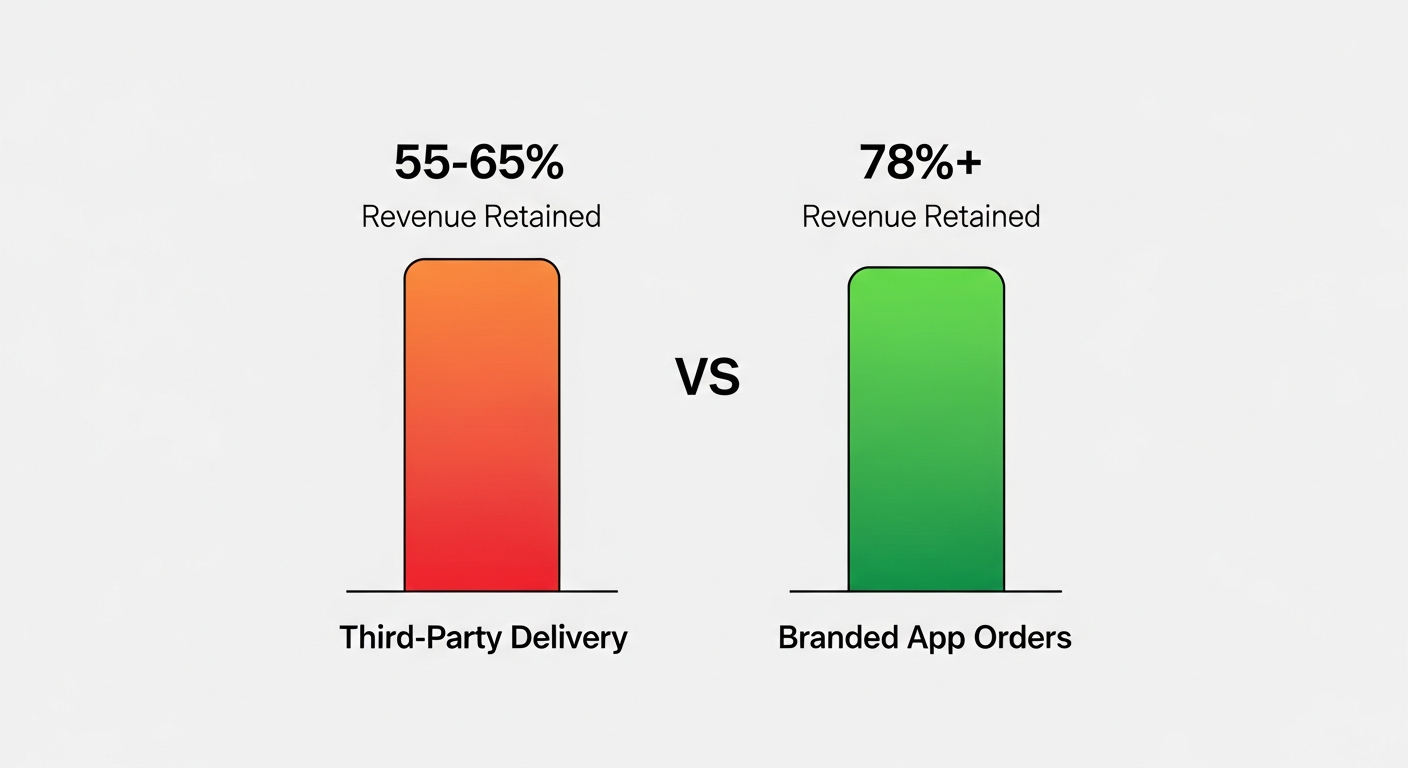
DoorDash, Uber Eats, and Grubhub charge between 15% and 30% per order in commission fees — that's straight from their 2024 merchant terms. For context, according to Square's 2024 Future of Commerce Report, restaurants using third-party delivery platforms retain only 55–65% of revenue per order after commissions. Compare that to restaurants using their own branded ordering channels, which retain an average of 78% of revenue per order.
Now scale that over a month. ChowNow's 2024 Independent Restaurant Report found that independent restaurants using their own branded app saved an average of $4,700 to $8,200 per month in third-party commissions, depending on order volume. For a restaurant doing $40,000 a month in delivery, shifting just 50% of orders to a branded app saved approximately $6,000 per month — or $72,000 per year.
That's not a rounding error. That's a second location. That's a kitchen renovation. That's the difference between surviving and scaling.
Hattie B's Hot Chicken in Nashville saw this firsthand. After launching a white-label branded app through an Olo and Paytronix integration in 2023, they reduced third-party commission spend by approximately $500,000 annually across their locations, according to Paytronix's case study library. Half a million dollars — redirected from platform fees back into the business.
Why Every Independent Restaurant Needs a White Label Restaurant App for Direct Revenue
Here's the part that surprises most owners: customers actually spend more when they order through your app.
Toast's 2024 Restaurant Trends Report found that restaurants using their own digital ordering channels saw average check sizes 20–25% higher than phone or walk-in orders — roughly $10 to $12 more per transaction. Olo's 2024 commerce data confirmed this pattern across the industry, showing branded app orders averaging $24 to $31 for fast-casual and $42 to $58 for full-service restaurants.
Pizzeria Locale in Denver is a perfect example. After implementing a ChowNow-powered branded app, their average digital order value hit $27.40 compared to $19.80 for in-store walk-in orders — a 38% lift. Direct digital orders jumped from 12% to 38% of total revenue within one year. The restaurant estimated it saved $8,500 per month by shifting orders away from DoorDash and Uber Eats.
Curry Up Now, an independent Indian fast-casual chain in San Jose, saw direct online orders increase 67% within six months of launching a white-label app through Owner.com, while third-party orders dropped by 31%. The app generated an estimated $1.1 million in incremental annual revenue across their locations.
These aren't theoretical projections. These are real restaurants, real numbers, real results.
The Customer Relationship You're Currently Renting
Noah Glass, Founder and CEO of Olo, put it bluntly at MURTEC 2024:
"Every order that goes through a third-party marketplace is a customer relationship you're renting, not owning. A branded app isn't a luxury anymore — it's the foundation of a direct relationship with your guest."
He's right, and the data backs it up. Olo's 2024 annual data showed that restaurants with direct digital ordering channels saw 2.5x higher customer lifetime value compared to customers acquired through third-party marketplaces. Direct-channel customers ordered 3.2 times per month on average versus 1.4 times per month for third-party-acquired customers.
Think about that. Your DoorDash customer orders from you once or twice a month — and they're just as likely to order from your competitor next time the app suggests it. Your app customer orders more than twice as often, spends more per visit, and builds a habit around your brand.
Thanx, a restaurant loyalty platform, reported in 2024 that customers enrolled in app-based loyalty programs had an average annual spend of $1,200 to $1,800 per customer, compared to $450 to $700 for non-enrolled customers. That's a 2.5 to 3x multiplier — per customer, per year.
When you own the app, you own the data. You know what they order, when they order, how often they come back, and when they start to drift. That intelligence is priceless. When you rely on DoorDash, you know nothing. They own your customer, and they'll happily sell that customer to your competitor.
Push Notifications: The Channel That Actually Gets Opened
Here's where a branded app creates a marketing advantage no other channel can match.
Paytronix's 2024 Annual Loyalty Report found that push notifications sent through branded restaurant apps achieved a 40% average open rate, with top-performing campaigns reaching 55–60%. By contrast, email campaigns from the same restaurants averaged just 19.7% open rates.
OneSignal's 2024 Benchmark Report broke it down further: food and beverage apps see push notification click-through rates of 7.5–10.2%, which is 3 to 5 times higher than email CTR in the same vertical, which averaged just 2.1%.
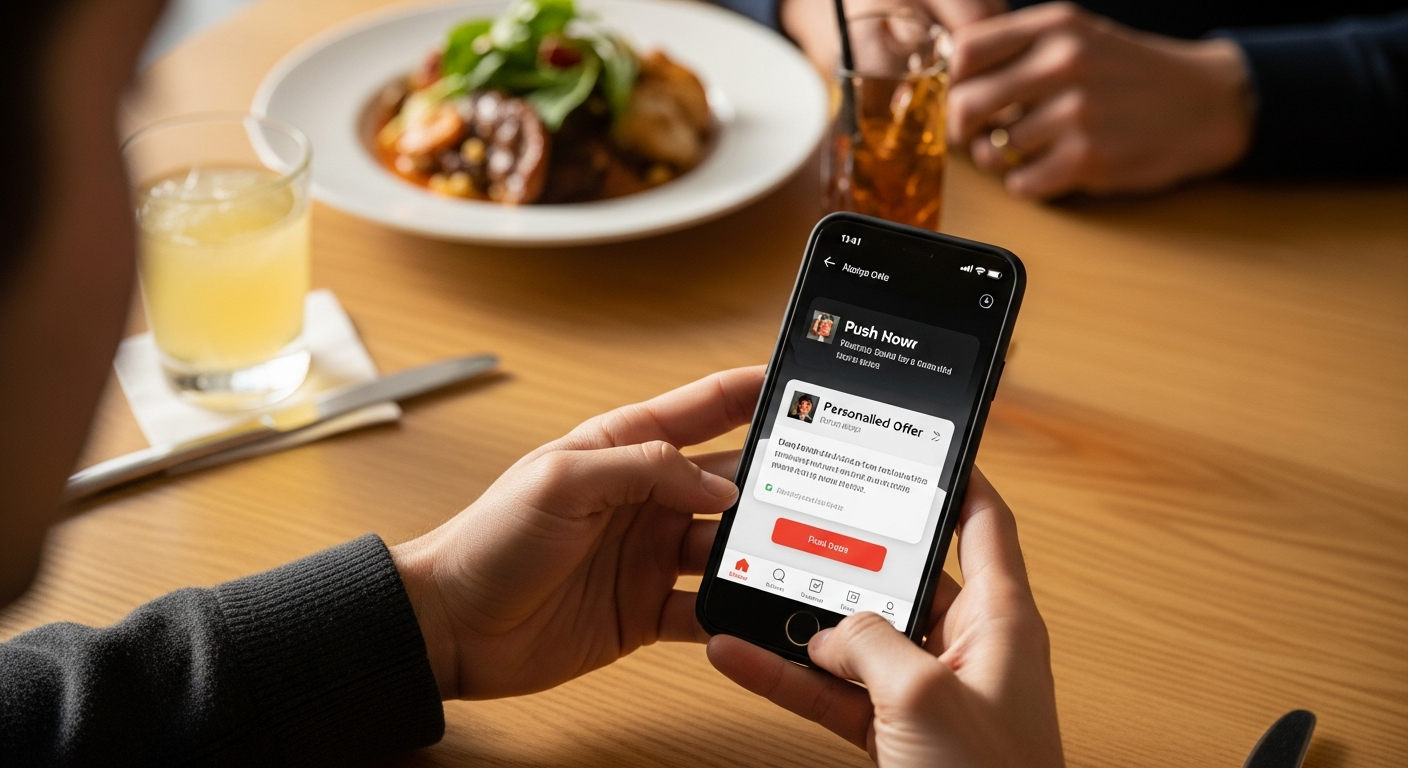
Slutty Vegan in Atlanta turned push notifications into a revenue engine. Their branded app's push campaigns for new menu drops achieved open rates of 48% and drove same-day sales spikes of 22–30% at participating locations. The app generated $2.3 million in direct digital revenue in its first year. Founder Pinky Cole told Black Enterprise that the app was "the single most important investment we made in owning our customer relationship."
Pizzeria Locale saw similar results: push notification campaigns promoting limited-time offers achieved a 34% open rate and 11% conversion rate. That's not impressions or reach — that's people opening a message and placing an order.
Brendan Sweeney, CEO of Popmenu, summed it up in a 2024 interview with Restaurant Business Online:
"The cost of NOT having your own digital channel is now measurable — and it's enormous."
App-Based Loyalty Creates a Retention Flywheel
Retention is where the real money is, and app-based loyalty programs blow every other format out of the water.
Paytronix's 2024 data found that app-based loyalty members visit 37% more frequently and spend 22% more per visit than non-loyalty members. Their 12-month retention rate was 68%, compared to just 31% for non-loyalty customers. Meanwhile, Black Box Intelligence's Q4 2024 report found that independent restaurants without digital engagement tools experience annual customer churn of 60–75%.
The retention gap between app users and non-app customers is staggering. Thanx reported 90-day retention rates of 55–65% for app users versus just 22–30% for non-app customers. Mendocino Farms in Los Angeles saw this play out exactly: after launching an enhanced branded app with integrated loyalty through Punchh, their 90-day customer retention rate for app users hit 61%, compared to 29% for non-app customers. App users represented 35% of total transactions but contributed 48% of total revenue due to higher average checks.
SevenRooms' 2024 Customer Engagement Report found that restaurants using integrated CRM and app-based loyalty saw 40% higher repeat visit rates within 90 days. Personalized offers sent through owned channels drove a 27% redemption rate, compared to just 12% for generic promotions.
Compare that to old-school punch cards, which Thanx reported see just a 5–8% redemption rate. App-based offers hit 25–35%. The gap isn't close.
Andrew Robbins, CEO of Paytronix, stated it plainly in his company's 2024 report:
"App-based loyalty members are worth 3x a non-loyalty guest over a 12-month period. For independents, a white-label app with integrated loyalty is the single highest-ROI technology investment available today."
Why 2026 Is the Tipping Point for Independent Restaurants and White Label Apps
The consumer shift is no longer coming — it's here.
Popmenu's 2024 Consumer Trends Survey found that 91% of consumers have ordered food online in the past year, and 45% order online at least once a week. More critically, 71% of diners said they are more likely to order from a restaurant that has its own app or online ordering system rather than going through a third-party marketplace.
The National Restaurant Association's 2025 State of the Restaurant Industry Report confirmed the supply side is responding: 67% of quick-service and 52% of full-service operators plan to devote more resources to technology in 2025–2026. The restaurants that move first capture the direct relationships. The ones that wait keep paying the toll.
Adoption isn't the barrier it used to be either. Owner.com's 2024 case study compilation reported that independent restaurants using white-label app platforms saw an average of 1,200 to 3,500 app downloads in the first six months, with 28% of downloaders placing an order within the first 14 days. Popmenu found that restaurants promoting their app through in-store signage, receipt prompts, and social media achieved download rates of 8–15% of their active customer base within the first 90 days. Offer a simple first-order incentive of $3–$5 off, and ChowNow's data shows download conversion increases by 2.5 to 4 times.
The Halal Guys scaled their branded app to over 500,000 enrolled loyalty members with a 52% active engagement rate. Snooze, an A.M. Eatery in Denver, used their app to increase reservations by 55% and reduce no-show rates from 14% to 11.3%. Mendocino Farms hit 200,000 downloads within 12 months.
These aren't tech companies. They're restaurants. They cook food. They seat guests. And they figured out that a white-label app is the highest-leverage move available.
The "Done-for-You" Factor Changes Everything
Here's the objection we hear most: "I don't have time to build an app. I'm running a restaurant."
Fair. That's exactly why the white-label, done-for-you model exists. You don't build it. You don't maintain it. You don't troubleshoot it. Someone handles the technology so you can handle the kitchen.
With a platform like Menuro, you get a fully branded mobile app — your name, your logo, your menu — with built-in loyalty programs, push notifications, direct ordering with zero commissions, birthday campaigns, win-back automations, and SMS marketing. No coding. No hiring a developer. No six-month timeline.
The question isn't whether you can afford to invest in a white-label app. Given the data — $72,000 a year in saved commissions, 2.5x customer lifetime value, 68% annual retention rates — the question is whether you can afford not to.
See What a Branded App Could Do for Your Restaurant
Every month you wait is another month of commissions paid, customer data lost, and relationships rented from platforms that don't care about your business.
Menuro builds your branded restaurant app for you — direct ordering, loyalty, push notifications, marketing automation — all done-for-you, all under your brand.
Book a free demo and see your restaurant's app in action: https://menuro.io/demo