
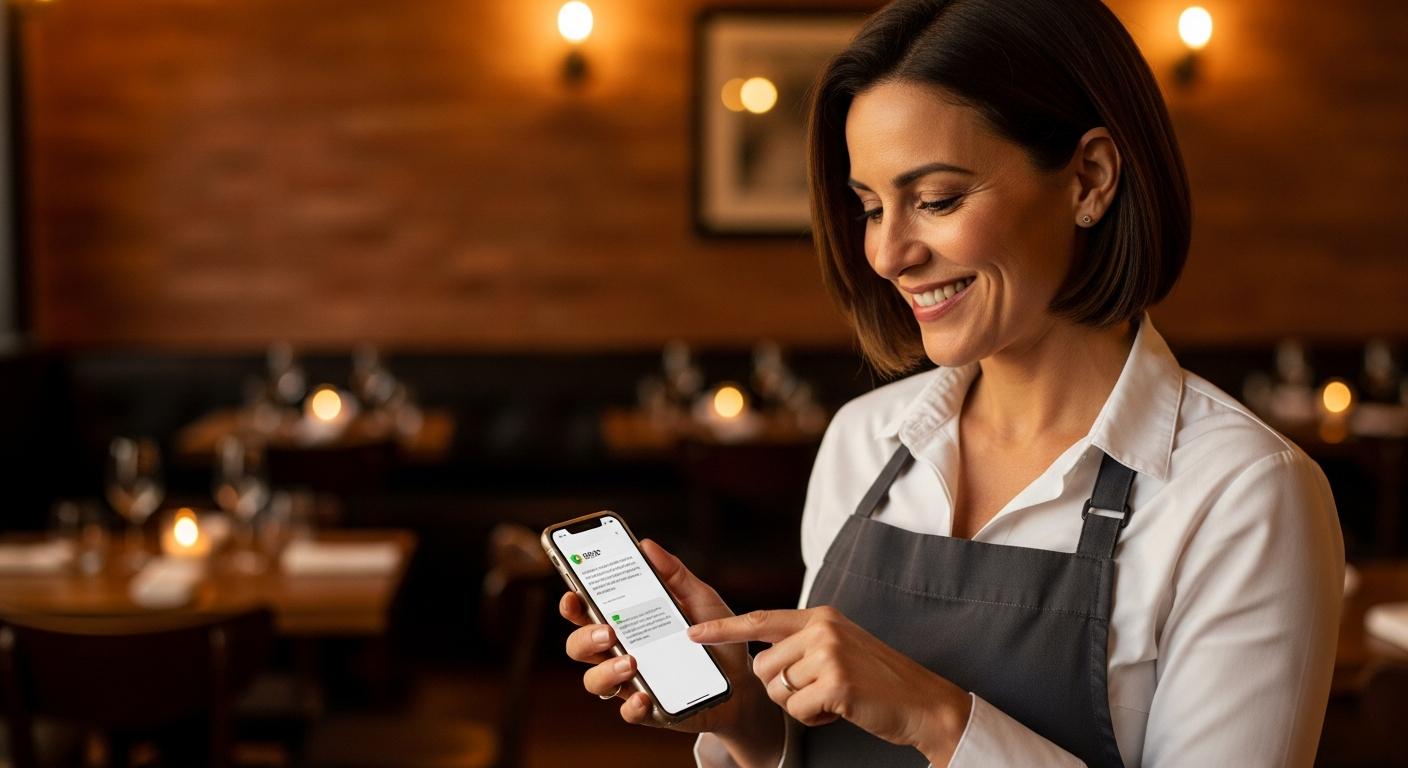
You know the feeling. It's 5pm on a Tuesday and the dining room is half empty. Your staff is standing around. The food prep you did this morning is sitting there. And somewhere across town, a customer who loves your food is deciding where to order tonight — probably from an app that's going to charge you 27% for the privilege of showing your menu.
There's a better way. And it fits in a text message.
Why SMS Works Better Than Every Other Marketing Channel
Let's get the numbers out of the way first, because they're hard to argue with.
Email open rates for restaurants hover around 20–25% — on a good day. Social media organic reach has collapsed to 2–5% of your followers. Paid ads cost money every time someone clicks.
SMS? 98% open rate. Average read time: 3 minutes after delivery. Click-through rates of 30–40% compared to email's 3%.
When you send a text, people read it. That's just the reality. Texts feel personal in a way that an Instagram post never will. They land in the same inbox where people get messages from their friends and family. That proximity matters.
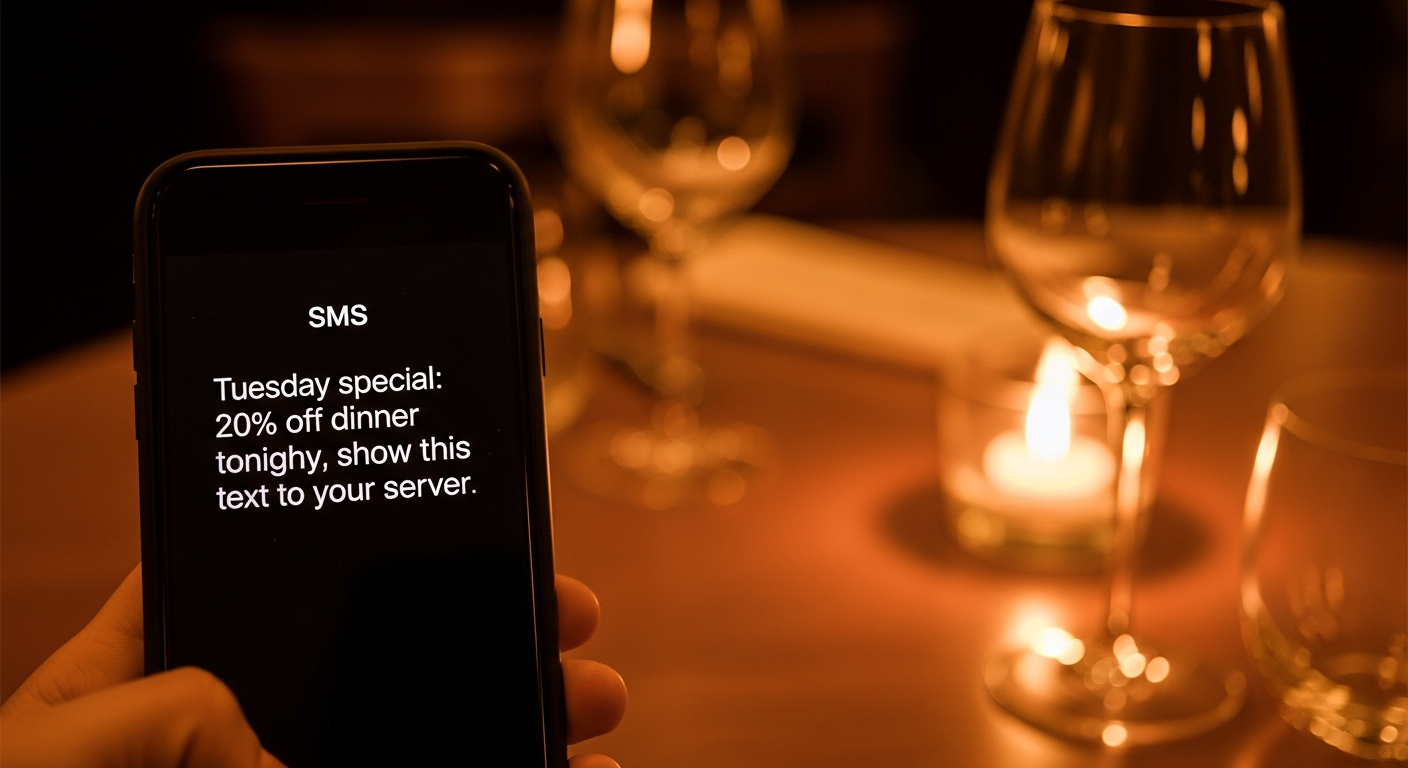
And crucially, when a restaurant sends an SMS at 4:45pm on a slow Tuesday that says "Hey — slow night tonight, here's 20% off if you come in before 7pm" — that message reaches someone at exactly the moment they're thinking about dinner.
Timing + relevance + personal channel = tables filled.
The Old Way vs. The Menuro Way
Most restaurant owners who've tried SMS marketing have a war story. They paid for some third-party platform, spent hours building a list manually, sent a few blasts, got some results, then let it die because it was too much work to maintain.
That's the old model. Collect numbers at the register. Export a spreadsheet. Log into a dashboard. Write a message. Schedule it. Repeat every week manually.
The operators who are winning in 2026 have flipped that model entirely. Their SMS marketing runs on autopilot — triggered by customer behavior rather than someone's calendar reminder.
Here's what that looks like in practice with Menuro:
A customer orders through your branded app on a Friday night. They're automatically tagged as a "Friday diner." Three weeks later, if they haven't come back, they get a text: "It's been a while — we saved your usual Friday spot. Show this for a free dessert this week."
That's not a mass blast. That's a targeted, behaviorally triggered message that feels personal — because it is.
Four SMS Campaigns Every Restaurant Should Be Running
1. The Slow Night Fill
This is the most immediate, highest-ROI campaign. You identify your slowest two or three nights (usually Monday through Wednesday for most restaurants) and set up an automated text that goes out in the afternoon.
The message is simple: show up tonight, get a deal. You control the discount — maybe it's 15% off, maybe it's a free appetizer, maybe it's a buy-one-get-one on drinks. What matters is that you're reaching people at the exact right moment: when they haven't decided where to eat yet.
One thing that makes this work: scarcity. "Available for the first 30 tables tonight" performs significantly better than an open-ended offer. People respond to limits.
2. The Win-Back Campaign
Every restaurant has a segment of customers who used to come in regularly and then just... stopped. Maybe they moved. Maybe they had a bad experience. Maybe they just forgot about you.
A win-back SMS targets anyone who hasn't visited in 30, 60, or 90 days (you set the threshold). The message acknowledges the gap without being weird about it: "We haven't seen you in a while. Here's something to get you back."
Win-back campaigns typically convert at 15–25%. That means for every 100 customers who've gone quiet, 15–25 of them come back from a single text. For a restaurant averaging $45 per check, 100 customers getting this message could drive $675–$1,125 in direct revenue.
That math compounds. Run it every month on your growing lapsed customer list and you've built a revenue recovery engine that costs almost nothing to operate.
3. The Birthday Campaign
The most personal message you can send someone is a birthday text. "Happy birthday — dinner's on us (or partly on us)" is essentially impossible to ignore.
What makes this work so well for restaurants isn't just the conversion rate (birthday campaigns consistently outperform every other type of SMS by a significant margin). It's the relationship signal. Remembering someone's birthday — especially a restaurant doing it — creates the kind of goodwill that turns occasional diners into regulars and regulars into evangelists.
The mechanics are simple: customer downloads your app and fills in their birthday. Automated message goes out on the day or the day before. Redemption tracked in-app. No manual work, no spreadsheets.
4. The New Item Announcement
When you add something to the menu — a seasonal special, a new dish you're excited about, a limited-time item — your most engaged customers want to know about it. These are the people who already love you. Giving them a first-look text ("We just added something we're really proud of — here's 10% off to try it this week") makes them feel like insiders.
This campaign does two things simultaneously: drives traffic and deepens loyalty. The people who respond to new item announcements are your best customers. Rewarding them with early access reinforces the behavior.
The Numbers Behind Automated SMS
Here's what a typical independent restaurant running automated SMS through Menuro sees in the first 90 days:
A restaurant with 800 customers in their loyalty database running a win-back campaign, slow-night fills, and birthday offers will typically recover 15–20% of lapsed customers, see a 12–18% lift in overall visit frequency among active loyalty members, and generate 3–5x the monthly cost of the platform in direct attributed revenue.
The keyword is "automated." These aren't campaigns someone has to remember to run. They fire based on customer behavior and calendar triggers. The restaurant owner sets them up once — or Menuro sets them up for you — and they run in the background indefinitely.
That's the done-for-you difference. You're not becoming a marketer. You're installing a marketing system.
What You Actually Need to Get Started
The barrier to SMS marketing is lower than most owners think. You don't need a huge list. You don't need a marketing background. You don't need to write great copy (though Menuro helps with that too).
What you need:
A way to collect numbers. This happens naturally through your branded mobile app. When customers download it to order or check their loyalty points, they're opting into your marketing list. A restaurant going from zero to 300 loyal app users typically takes 2–4 weeks with a basic push at the register.
Segmentation. Blasting your whole list every time is the fastest way to get opt-outs. The campaigns that work are targeted — lapsed customers get win-back messages, frequent visitors get VIP treatment, birthday people get birthday offers. Your platform needs to handle this automatically.
Compliance. SMS marketing has rules (TCPA in the US), and they matter. Every customer needs to have explicitly opted in, and every message needs an easy opt-out. Menuro handles all of this automatically — opt-in collection, consent logging, opt-out processing — so you're never at legal risk.
Timing. Restaurant SMS works best between 4pm and 6pm on weekdays. That's when people are thinking about dinner and haven't committed yet. Your campaigns should be pre-scheduled for these windows.
The Real Cost of Not Doing This
Every week you're not running SMS campaigns is a week your lapsed customers are forgetting about you. It's a slow Tuesday where the dining room is half-empty when a well-timed text could have filled it. It's a birthday that passed without your restaurant being part of it.
DoorDash and Uber Eats have built billion-dollar businesses on a simple insight: restaurants need customers, and they're willing to pay for access to them. The commission model works for the platforms because most restaurants don't have a direct channel to their own customers.
SMS changes that equation. When you own the relationship — when you can reach your customers directly, for free, at the right moment — you stop needing the middlemen.
That's the actual value proposition. Not just "send texts and fill tables" (though yes, that too). It's owning your customer relationships so completely that no platform can hold them hostage.
Ready to Turn Your Slowest Nights Into Your Best Ones?
Menuro sets up your SMS marketing, loyalty program, and branded mobile app — all done for you, no tech skills required. Your first automated campaigns can be live within days.