
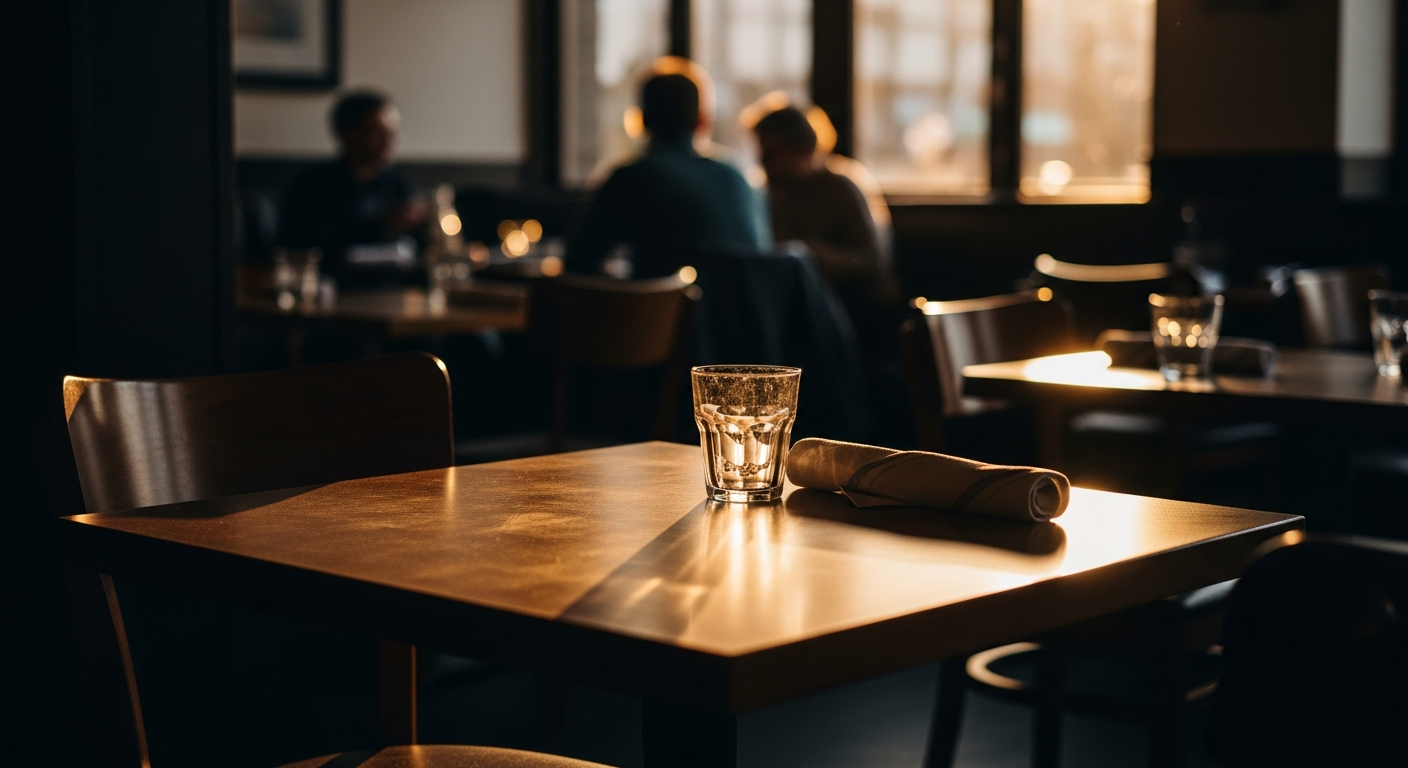
Maria ordered the same thing every Tuesday and Friday. Grilled salmon, side of broccolini, a glass of the Albariño. She sat at the bar, chatted with the bartender, tipped 25%. She did this for fourteen months.
Then she stopped.
No complaint. No bad Yelp review. No dramatic exit. She was there on a Friday, and then she wasn't there the next Tuesday, or the Tuesday after that, or ever again. The bartender mentioned it to the manager sometime around week three. The manager shrugged — people get busy. By month two, nobody brought it up anymore.
Maria's tab averaged $45 per visit. Twice a week, that's $4,680 a year. She often brought a friend, which pushed the annual number closer to $9,360. That revenue vanished without a sound.
This story plays out in every restaurant, every month. And almost nobody tracks it.
The Regular Who Came Twice a Week Then Vanished Is Your Most Expensive Blind Spot
Most restaurant owners obsess over getting new guests through the door. That makes sense — the dining room needs bodies. But the economics of losing a regular are brutal in a way that new-customer acquisition can never offset.
Toast calculated in their 2024 data that a guest visiting twice a week at a $45 average check represents $4,680 per year solo, or roughly $9,360 if they typically bring one other person. Lose five of those regulars per month, and you're looking at $280,800 to $561,600 in annual revenue walking out the door.
Those numbers aren't hypothetical. Thanx's 2024 Guest Engagement Report found that the top 20% of restaurant guests drive 60–70% of total revenue. Paytronix's 2024 Annual Loyalty Report confirmed the same pattern across their platform. When Zach Goldstein, founder of Thanx, discussed this on a 2024 webinar, he put it bluntly: "A regular who visits twice a week and then vanishes represents a five-figure annual revenue loss, and most operators don't realize it for months — if ever."
The problem isn't that owners don't care. The problem is that 78% of independent restaurants have no automated system to flag when a regular disappears, according to Toast's 2024 Restaurant Trends Report. They rely on staff memory. And with annual employee turnover at 79% across the restaurant industry (NRA, 2025), the person who knew Maria's name and her order might not even work there anymore.
Why Regulars Vanish (It's Rarely the Food)
SevenRooms tracked this across more than 10,000 restaurant locations and published their findings in a 2024 case study. Boqueria, a Spanish tapas group in New York, used SevenRooms' guest data platform to investigate why their regulars were disappearing. What they found was striking: most lapsed regulars had experienced what SevenRooms calls a "silent bad experience." Something went wrong — a long wait, a wrong order, an off night in the kitchen — but the guest never said a word. They left, seemed fine, and never came back.
The ratio is painful: for every one guest who complains, 26 leave without saying anything. SevenRooms validated this with modern restaurant data in 2024, and it tracks with older research from the White House Office of Consumer Affairs.
Joel Montaniel, CEO of SevenRooms, described it this way in Skift Table (2024): "The silent churner is the most expensive problem in hospitality. These are guests who had one off experience — maybe the host didn't recognize them, maybe their favorite server left, maybe the menu changed — and they just quietly moved on."
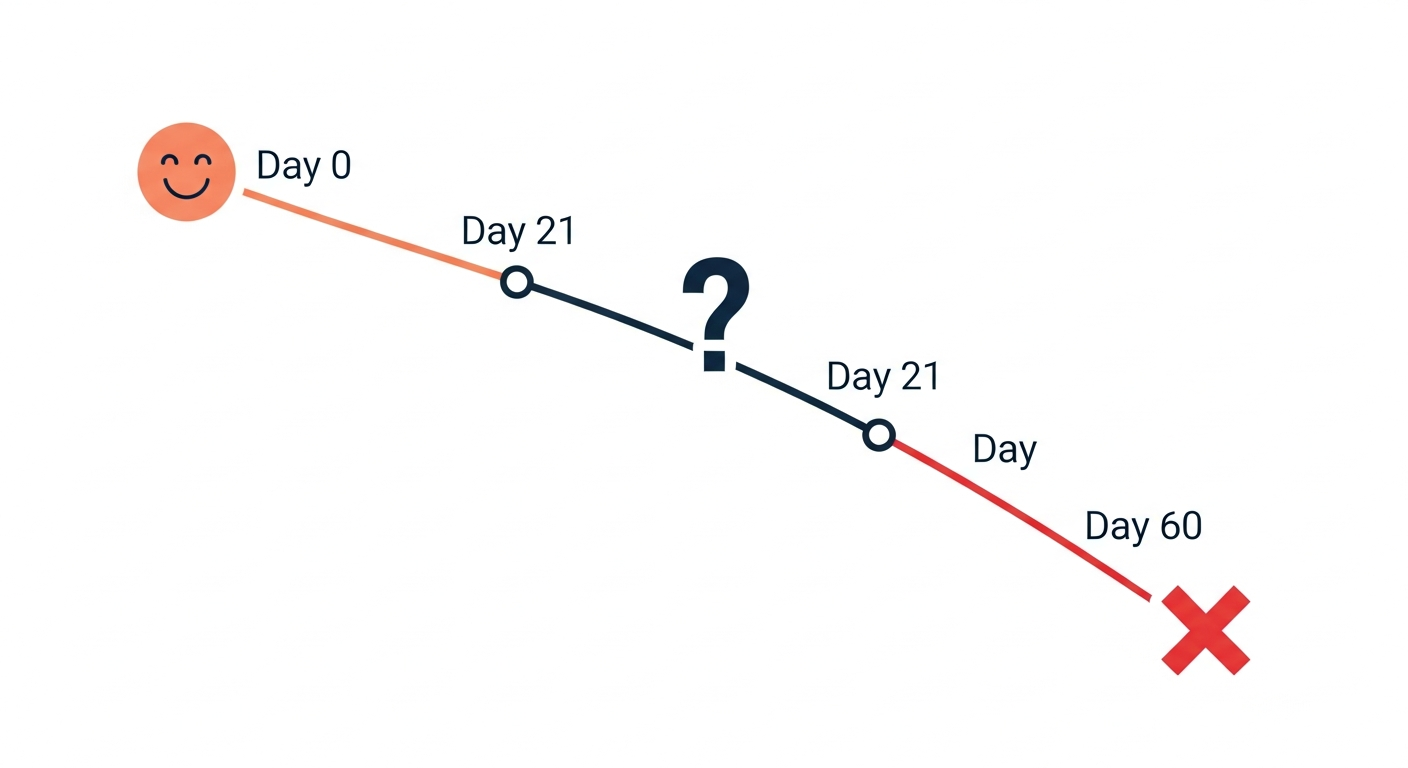
Homeslice Pizza in Austin saw this firsthand. After implementing SevenRooms' CRM in 2023, ownership noticed several regulars — guests dining six to eight times per month — had quietly stopped showing up. When they created a "VIP Lapse Alert" and reached out, 26% of lapsed guests said they'd had a bad experience they never reported. Another 41% said they'd fallen out of the habit. Only 18% had an unavoidable reason like moving to a new neighborhood.
Square's 2024 Future of Commerce report echoed this across a broader sample: 38% of customers who previously visited weekly reduced their frequency or stopped entirely within 12 months. The top reasons were life changes, inconsistent experiences, and — this one stings — "feeling unrecognized."
Brendan Sweeney, CEO of Popmenu, addressed this at their 2024 Restaurant Marketing Summit: "The #1 reason regulars stop coming isn't a bad meal — it's apathy. They feel like the restaurant doesn't know or care that they exist."
David Chang put it even more directly on his podcast in 2024: "When they disappear, something broke. And it's almost never about the food. It's about how they felt."
The 30-Day Window You Can't Afford to Miss
Andrew Robbins, CEO of Paytronix, laid out the timeline in his company's 2024 Annual Loyalty Report commentary: "The window to recover a lapsed regular is about 30–45 days. After 60 days of no contact and no visit, the probability of that guest ever returning drops below 10%."
Tocaya Modern Mexican, a fast-casual chain with 20+ locations in Los Angeles, tested this with their digital ordering data. Guests who ordered twice a week or more and then went silent for 14+ days had only a 15% chance of coming back on their own. When Tocaya sent a targeted push notification paired with an email, that number jumped to 41%.
The math on intervention is clear. Paytronix found that automated "we miss you" campaigns sent to guests who haven't visited in 30+ days achieve open rates of 42–48%, compared to the 18–22% average for standard restaurant emails. The return rate on those campaigns runs 12–18%.
Popmenu's 2024 Restaurant Marketing Benchmark Report added another layer: personalized re-engagement messages that reference a guest's past orders convert at 5.4 times the rate of generic promotional blasts — 14.2% click-through versus 2.6%.
Olo's 2025 "Beyond the Transaction" report found that restaurants using first-party data for win-back campaigns saw a 26% recovery rate among lapsed digital customers within 60 days.
These aren't marginal improvements. Revenue per email sent for win-back campaigns runs $0.28–$0.44, compared to $0.11 for standard promotions, according to Popmenu's 2024 benchmarks.
What Restaurants That Recover Lapsed Regulars Do Differently
Hattie B's Hot Chicken in Nashville, with more than 10 locations, segmented their Paytronix loyalty data in 2024 and found that 8% of members who had been visiting twice a week or more had gone dormant — no visit in 45+ days. That 8% represented a disproportionate chunk of revenue.
They built a three-touch win-back sequence:
- Day 30 with no visit: A "we miss you" email offering a free side.
- Day 45: An SMS message with a $5-off coupon.
- Day 60: A final email written to feel personal, from the founder.
The results, cited in Paytronix's 2024 Annual Loyalty Report case examples: Touch one had a 44% open rate and 11% redemption. The SMS at day 45 outperformed it — 52% open rate, 16% redemption. The third touch still pulled a 38% open rate and 8% redemption. Overall, 28% of dormant high-frequency guests came back. Across all locations over six months, Hattie B's estimated $142,000 in recovered revenue.
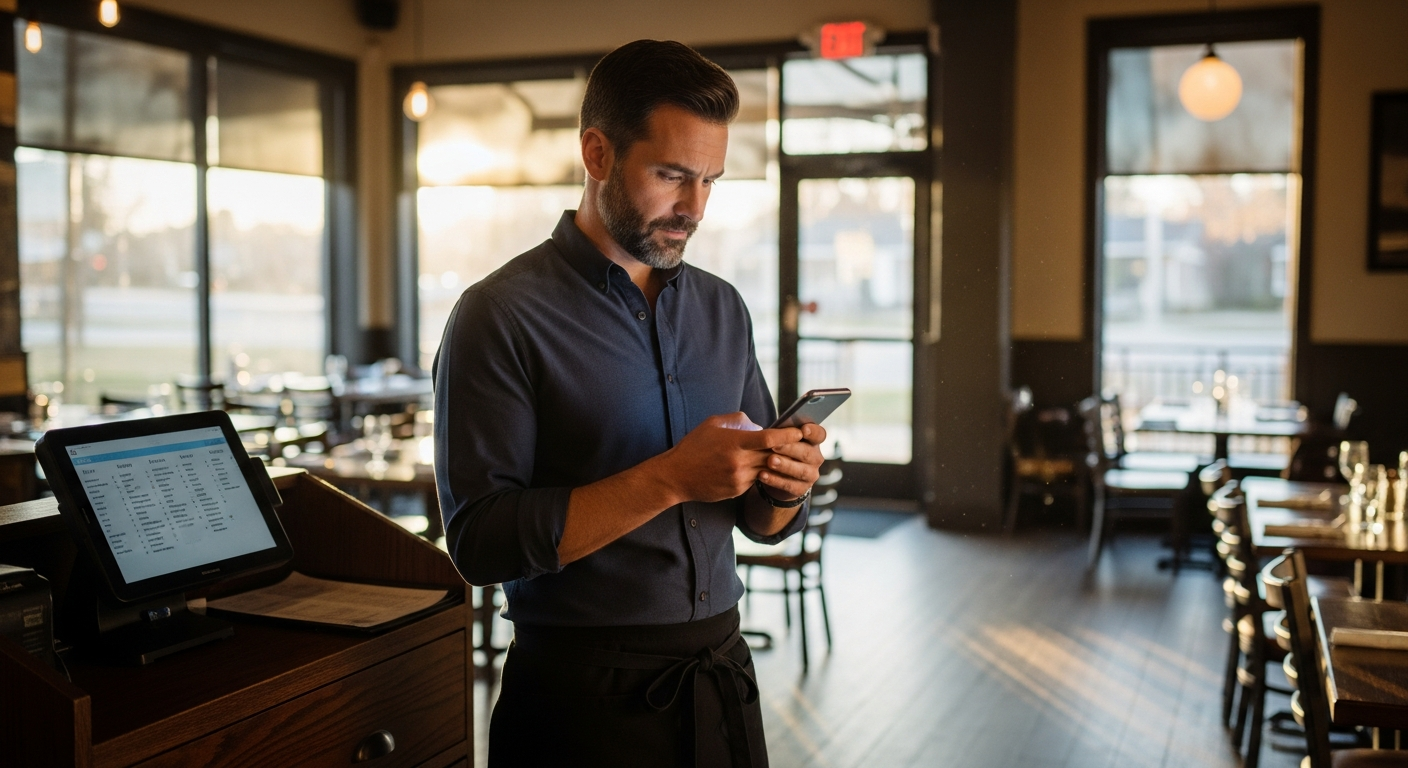
Homeslice Pizza's approach in Austin was simpler but effective. Their VIP Lapse Alert triggered a personalized email from the general manager after 21 days of absence, referencing the guest's usual order and including a complimentary appetizer. Thirty-four percent of lapsed VIPs returned within two weeks. Those returning guests spent 22% more per visit than their historical average. The restaurant estimated $8,200 per month in recovered revenue.
Odd Duck, also in Austin, took a different angle using Popmenu's marketing platform. They noticed that regulars who stopped opening emails were 3.8 times more likely to stop visiting within 60 days. Email disengagement was a leading indicator of physical absence. Instead of sending a discount, they created "insider" content — a chef's preview of a new dish, a behind-the-scenes video. The re-engagement email hit a 37% open rate versus their standard 19%, and 14% of re-engaged subscribers visited within two weeks. No margin sacrificed on discounts.
Boqueria's approach was the most direct. When a regular's visit frequency dropped, the GM received an alert and picked up the phone. Sixty-two percent of guests who got a personal call from the GM came back within 30 days. The team identified three to four "silent detractors" per week per location who would have otherwise disappeared permanently.
The Compounding Cost of Doing Nothing
SevenRooms estimated in 2024, based on data from their platform across 10,000+ locations, that restaurants without any CRM or guest tracking system lose $110,000–$200,000 annually in revenue from regulars who could have been recovered with basic outreach.
That estimate tracks with the individual math. If a full-service restaurant has 30 regulars visiting twice a week (a modest number for a well-established spot), and loses even 15–25% of them per year — which Paytronix's 2024 data shows is typical even for loyalty program top-tier members — that's 5 to 8 regulars gone. At $4,680 to $9,360 per regular per year, the annual loss lands between $23,400 and $74,880. For restaurants with larger regular bases or higher check averages, the number climbs fast.
Dr. Michael Luca at Harvard Business School has studied this asymmetry extensively. As he noted in a 2024 Harvard Business Review article on restaurant economics: "Acquiring a new customer costs 5–7x more than retaining an existing one, yet the vast majority of marketing spend goes toward acquisition."
The National Restaurant Association's 2025 State of the Industry report found that 80% of adults say they'd be more likely to return to a restaurant that acknowledged their absence or offered a personalized incentive. Only 22% of operators reported having any lapsed-customer outreach program.
That gap — between what guests want and what restaurants provide — is where the money evaporates.
A Practical System for Catching the Vanishing Regular
You don't need enterprise software to start. You need three things:
A way to know who your regulars are. This means capturing visit data, whether through a loyalty program, a POS system that tracks repeat customers, a reservation platform, or a branded ordering app. Staff memory doesn't count — not with 79% annual turnover.
A trigger that fires when patterns break. Set a threshold: if a guest who visits weekly hasn't been in for 21 days, something should happen. An alert to the manager. An automated email. A text. The specific tool matters less than the fact that the absence gets noticed.
A response that feels personal. Hattie B's, Homeslice, Boqueria, and Odd Duck all succeeded with different tactics — free sides, personal calls, insider content, founder emails. The common thread was specificity. The guest felt recognized as an individual, not as a segment.
Dawn Sweeney, former CEO of the National Restaurant Association, framed the broader shift in the NRA's 2025 report foreword: "The post-pandemic consumer is less loyal by default but more loyal when earned. Visit frequency has become more volatile. The restaurants that are growing are the ones that have built systems to notice when a regular's pattern changes and respond immediately."
Maria didn't leave because the salmon was bad. She left because nobody noticed she was gone.
See How Menuro Helps You Spot — and Win Back — Lapsed Regulars
Menuro gives your restaurant its own branded app with built-in guest tracking, automated lapse alerts, and personalized win-back messaging. You see who's slipping away before the revenue disappears, and you reach them with the kind of targeted outreach that recovers 25–40% of lapsed guests.
Book a demo at menuro.io/demo and we'll walk you through it with your own numbers.