
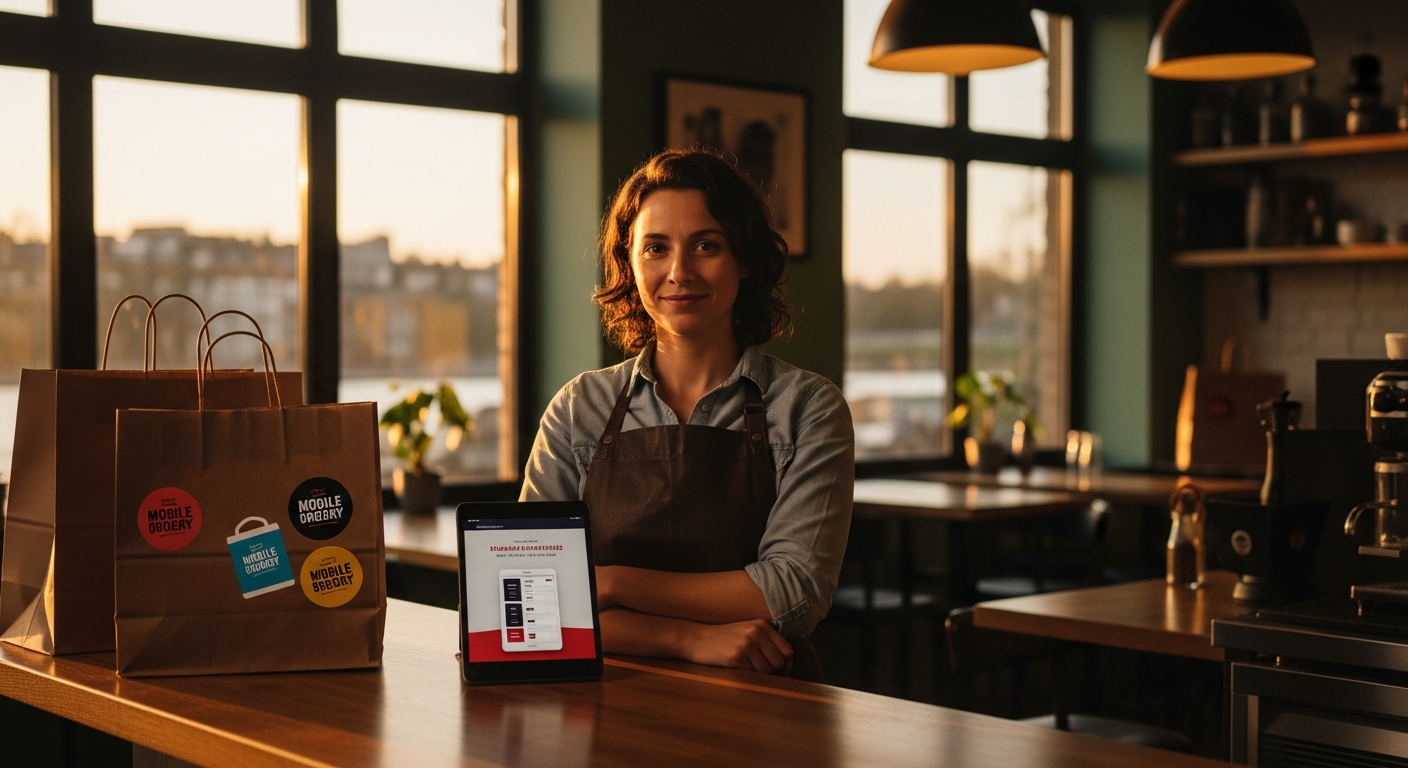
You check your DoorDash Merchant Portal on a Tuesday morning. Last month, $14,000 in orders flowed through the platform. That sounds great — until you realize $3,080 of it went straight to DoorDash in commissions. Meanwhile, the customers who used to walk through your door every Thursday night? They're ordering from their couch now. They're still eating your food. They just don't think of it as your food anymore.
This is the reality facing thousands of independent restaurant owners right now. If you're trying to figure out how independent restaurants can win back customers who switched to DoorDash, you're not alone — and the good news is, the operators who've cracked this problem have a clear playbook.
Let's break it down.
The Problem Is Bigger Than You Think
DoorDash now controls 67% of the U.S. food delivery market as of Q1 2024, according to Bloomberg Second Measure. They reported 37 million monthly active users in their Q4 2024 earnings call. The U.S. online food delivery market hit $63.2 billion in 2024 and is projected to reach $96.5 billion by 2027 (Statista Digital Market Outlook).
Those numbers matter because they represent a massive behavioral shift — and it's happening at your expense.
According to the Popmenu 2024 Restaurant Consumer Trends Report, 34% of consumers who used to dine in at independent restaurants at least twice a month now visit once a month or less, replacing those visits with third-party delivery. Among Gen Z diners, 48% say DoorDash or Uber Eats is their primary way of interacting with restaurants (Square Future of Restaurants Report 2024).
Here's the stat that should keep you up at night: a Paytronix study found that 60% of delivery customers feel loyalty to the delivery platform, not the restaurant. Only 19% could even recall the specific restaurant name from their last DoorDash order without checking the app.
Your regulars didn't leave because they stopped liking your food. They left because someone made it easier to order from their couch — and in the process, erased your brand from the equation.
The Commission Tax Is Killing Your Margins
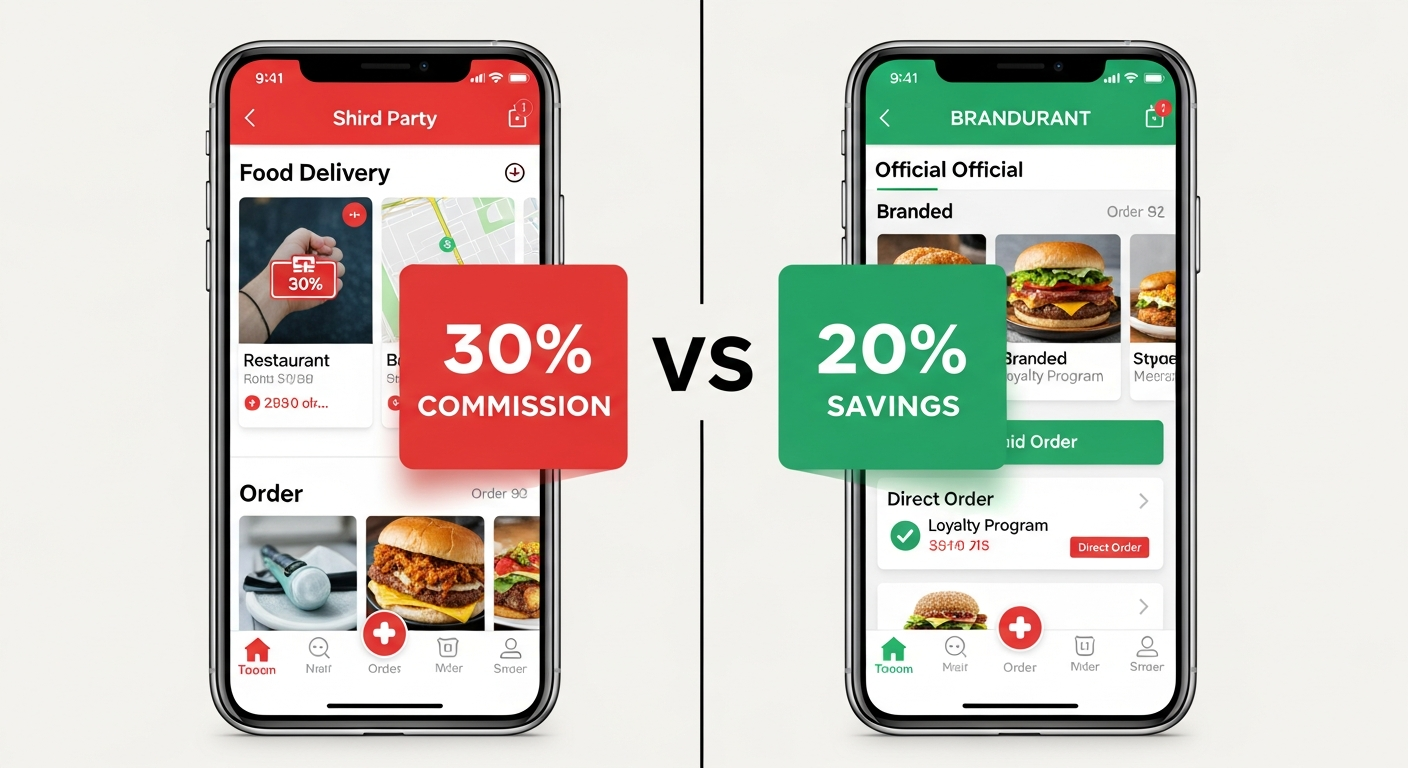
Independent restaurants pay 15%–30% commission per order to DoorDash, with the average effective rate landing around 22% after marketing fees and promotions, according to Restaurant Business Magazine.
Let's do the math on a typical $35 delivery order:
- Through DoorDash (22% commission): You net $27.30 before food cost. After a typical 30% food cost, you keep roughly $16.80 in gross margin.
- Through direct ordering: You keep the full $35 before food cost. After the same 30% food cost, you keep $24.50 in gross margin.
That's a $7.70 difference per order — straight to your bottom line. The National Restaurant Association's 2025 State of the Restaurant Industry Report confirms these economics.
It's no wonder that 43% of independent restaurant operators said third-party delivery commissions were their single largest non-food expense in 2024 (Toast 2025 Restaurant Trends Report).
So the question isn't whether you should win these customers back to direct ordering. It's how fast you can do it.
How Independent Restaurants Can Win Back Customers Who Switched to DoorDash: The Playbook
The restaurants winning this battle aren't doing one clever thing. They're running a system — a combination of direct ordering, smart marketing, loyalty mechanics, and one very underrated tactic: the bag insert.
Here's what actually works, backed by real data.
Step 1: Make Direct Ordering Effortless (and Better)
Before you can win anyone back, you need a direct ordering channel that's as easy as tapping DoorDash. Olo's 2024 Annual Report found that restaurants switching from DoorDash-only to branded direct ordering saw an average increase of $4.72 per check — direct orders averaged $40.17 vs. $35.45 on third-party platforms.
Why the higher check? No algorithm is pushing competing restaurants. No discount pressure. Customers browse your full menu, see your upsells, and engage with your brand.
Popmenu reported that restaurants using their direct ordering platform saw a 23% increase in order frequency from customers who previously ordered exclusively through DoorDash, within the first 90 days.
The retention numbers are even more compelling. Direct ordering customers have a 30-day repeat order rate of 38%, compared to just 17% for third-party marketplace customers (Olo Q3 2024 Data Insights).
And here's a counterintuitive move that pays off: even if you offer free delivery on direct orders — absorbing the $5–$7 cost via a service like DoorDash Drive or Relay — you still save an average of $6.12 per order compared to marketplace commissions (ChowNow 2024).
Step 2: Use Every DoorDash Bag as a Recruiting Tool
This is the most underutilized tactic in the industry. Every DoorDash order that leaves your kitchen is a chance to convert that customer to direct ordering.
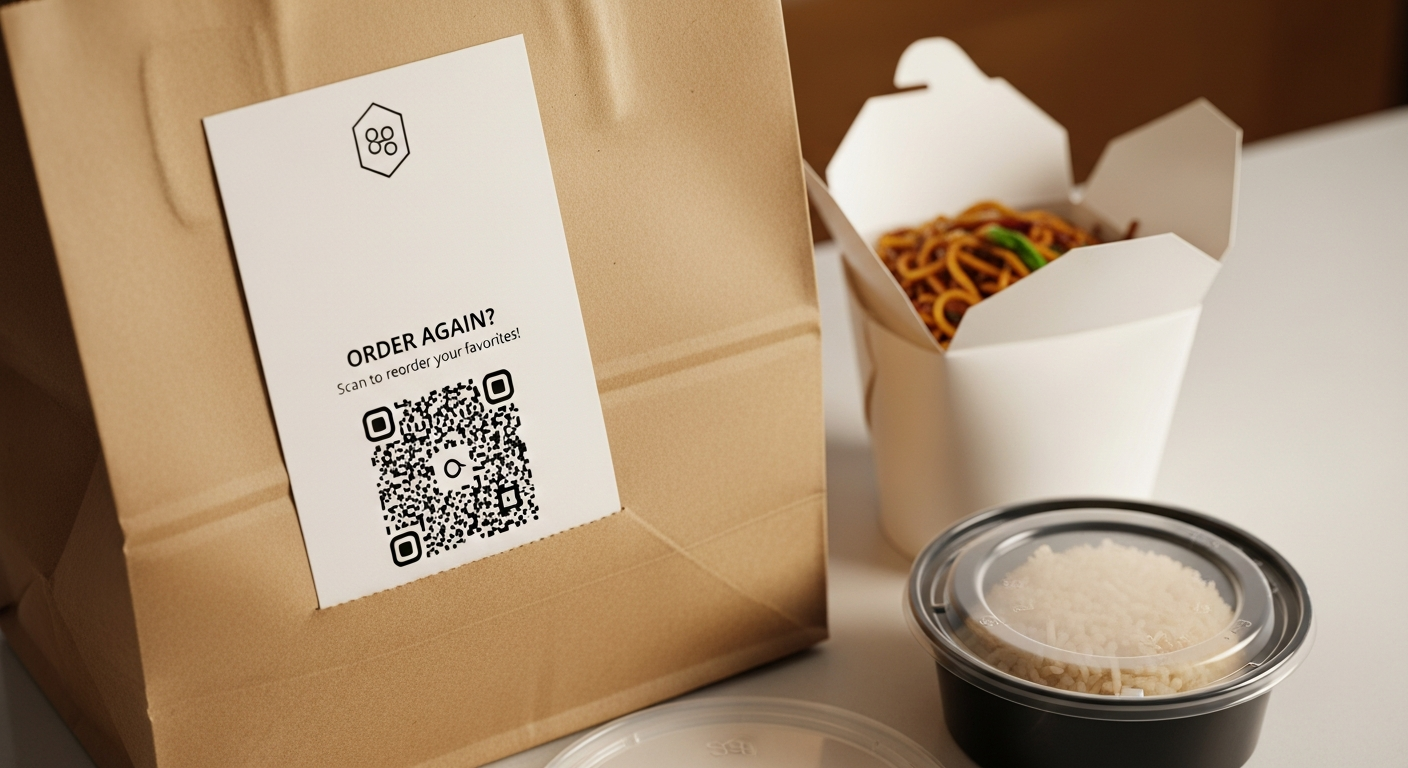
Daughter Thai Kitchen in Oakland, CA did this brilliantly. Owner Ann Le included a branded card in every DoorDash delivery bag that read: "Love our food? Next time, order direct at DaughterThai.com — same food, better price, and you support us directly."
The results were staggering. Within 6 months, 1,400 customers migrated from DoorDash to direct ordering. Their repeat direct-order rate hit 44% — compared to just 15% on DoorDash. Monthly revenue from direct digital orders jumped from $6,000 to $38,000. Overall profit margin on off-premise orders improved by 14 percentage points (ChowNow 2024 Case Study Library; SevenRooms Blog, June 2024).
ChowNow's data shows bag insert QR codes achieve a 6–9% scan rate — which doesn't sound huge until you realize you're getting that from customers you're already paying DoorDash to serve. It's free marketing funded by their commission.
Hank's Pasta Bar in Richmond, VA used the same approach — table tents, bag inserts with a QR code, and a $5 off first direct order incentive. Direct online orders grew from 8% to 41% of total off-premise revenue in nine months. DoorDash orders dropped from 35% to 18%. They saved an estimated $6,800 per month in commissions (Popmenu 2024 Customer Spotlight; Richmond BizSense, August 2024).
Step 3: Build an SMS and Email List — Then Automate the Win-Back
Once you have direct customers, you have something DoorDash never gives you: their contact information.
Restaurant email marketing has the highest open rates of any industry — 40.5% in 2024, according to Mailchimp's Industry Benchmarks. SMS is even more powerful: 98% open rate and 19.3% click-through rate (Popmenu 2024 Marketing Benchmark Report).
But the real magic is in the automation. SevenRooms' 2024 Marketing Performance Report found that restaurants running "We Miss You" lapsed-customer email campaigns — targeting customers who hadn't ordered in 60+ days — saw a 12.7% conversion rate. Nearly 1 in 8 lapsed customers placed a direct order within 7 days.
Personalization matters enormously. Paytronix found that restaurants sending personalized offers based on past order history via SMS achieved a 27% redemption rate, compared to just 11% for generic blast promotions.
Pizzeria Locale in Denver built an email list of 8,500 subscribers in 8 months using Toast's Marketing Suite. Their automated "We Miss You" emails (sent after 30 days of inactivity) had a 44% open rate and 9.2% conversion rate. Direct online ordering grew to 48% of off-premise sales, and same-store revenue increased 11% year-over-year (Toast 2024 Customer Spotlight; Denver Business Journal, September 2024).
Hank's Pasta Bar built an SMS list of 3,200 customers in 9 months and saw a 22% redemption rate on "order direct" offers.
The pattern is clear: capture the data, automate the outreach, personalize the offer.
Step 4: Launch a Loyalty Program That Rewards Direct Behavior
Loyalty programs aren't just about points. They're about creating a reason to choose you over the DoorDash algorithm.
The numbers are decisive. According to Paytronix's 2024 Annual Loyalty Report, restaurants with active digital loyalty programs retained customers at a rate 5.8x higher than those without. The average loyalty member visits 3.6 times per month vs. 1.4 times for non-members (Toast 2025 Restaurant Trends Report). Annual churn drops from 68% without a loyalty program to 28% with one.
Square reported that loyalty-enrolled customers spend 52% more over a 12-month period than non-enrolled customers.
Big Dave's Cheesesteaks in Atlanta built a branded app through Lunchbox with a points-based loyalty program and exclusive menu items available only through direct ordering. App downloads hit 12,000+ in five months with a 67% app-to-first-order conversion rate. Direct orders grew from 12% to 55% of all off-premise orders. Third-party commission spending dropped 60% — from $18,000/month to $7,200/month. Loyalty members had an average check $6.80 higher than non-members and visited 4.1 times per month vs. 1.7 for DoorDash customers (Lunchbox 2024 Case Study; Nation's Restaurant News, April 2024).
Step 5: Own Your Google Presence
This one's simple and massively underutilized. According to the Popmenu 2024 Consumer Trends Report, 72% of consumers who search for a restaurant on Google click on the direct website or ordering link if one is prominently displayed, rather than navigating to a third-party app.
Toast's 2024 Digital Ordering Report found that restaurants adding an "Order Direct" link to their Google Business Profile saw a 31% increase in direct online orders within 60 days. And Google/Ipsos data shows 88% of consumers who search "restaurants near me" on mobile take action within 24 hours.
If your Google Business Profile still links to DoorDash — or worse, has no ordering link at all — you're handing customers to the platform before they even consider ordering directly.
Don't Abandon DoorDash — Just Stop Depending on It
None of the restaurants in these case studies pulled off DoorDash entirely. Hank's Pasta Bar still runs 18% of revenue through the platform. They use it as a discovery channel — a way for new customers to find them — while systematically converting those customers to direct ordering.
Taim Mediterranean Kitchen in New York took this approach to scale. After partnering with Olo for direct ordering and Thanx for loyalty, they used geo-targeted Instagram ads to reach customers who had previously ordered via DoorDash. Their direct digital orders increased 127% year-over-year. Customer acquisition cost for direct ordering was $3.40 — compared to an estimated $8–$12 per customer through DoorDash after commissions. Their 90-day retention rate for direct orderers was 52% vs. 21% for marketplace customers. Annual savings: an estimated $210,000 across all locations (Olo 2024 Customer Success Stories; Eater NY, March 2024).
The strategy isn't anti-DoorDash. It's pro-independence. Use the platforms for what they're good at (discovery), and invest everything else in building direct relationships you own.
The Math Is Simple. The Execution Doesn't Have to Be Hard.
Let's recap what the data shows:
- Direct orders average $4.72 more per check than marketplace orders
- Direct customers reorder at 2x the rate of DoorDash customers
- Loyalty members visit 3.6x per month vs. 1.4x for non-members
- Automated win-back emails convert 12.7% of lapsed customers
- Personalized SMS offers hit 27% redemption rates
- Restaurants running this playbook save $6,000–$18,000/month in commissions
The challenge for most independent restaurant owners isn't knowing this — it's having the time and tech bandwidth to execute it. Between running a kitchen, managing staff, and keeping up with the daily chaos, building a branded app, setting up SMS automations, designing a loyalty program, and optimizing your Google presence can feel like a second full-time job.
That's exactly the problem Menuro was built to solve.
Ready to Win Back Your Customers? Let Menuro Do the Heavy Lifting
Menuro builds your branded mobile app, sets up your loyalty program, automates your SMS and push notification campaigns, enables commission-free direct ordering, and handles the entire tech stack — so you can focus on cooking great food and running your restaurant.
No tech skills needed. No long implementation timelines. Just a done-for-you system that brings your customers back where they belong: ordering directly from you.
Every week you wait, more of your regulars become DoorDash's regulars.
Book a free demo at menuro.io/demo and see how Menuro can help your restaurant take back control — starting this week.