
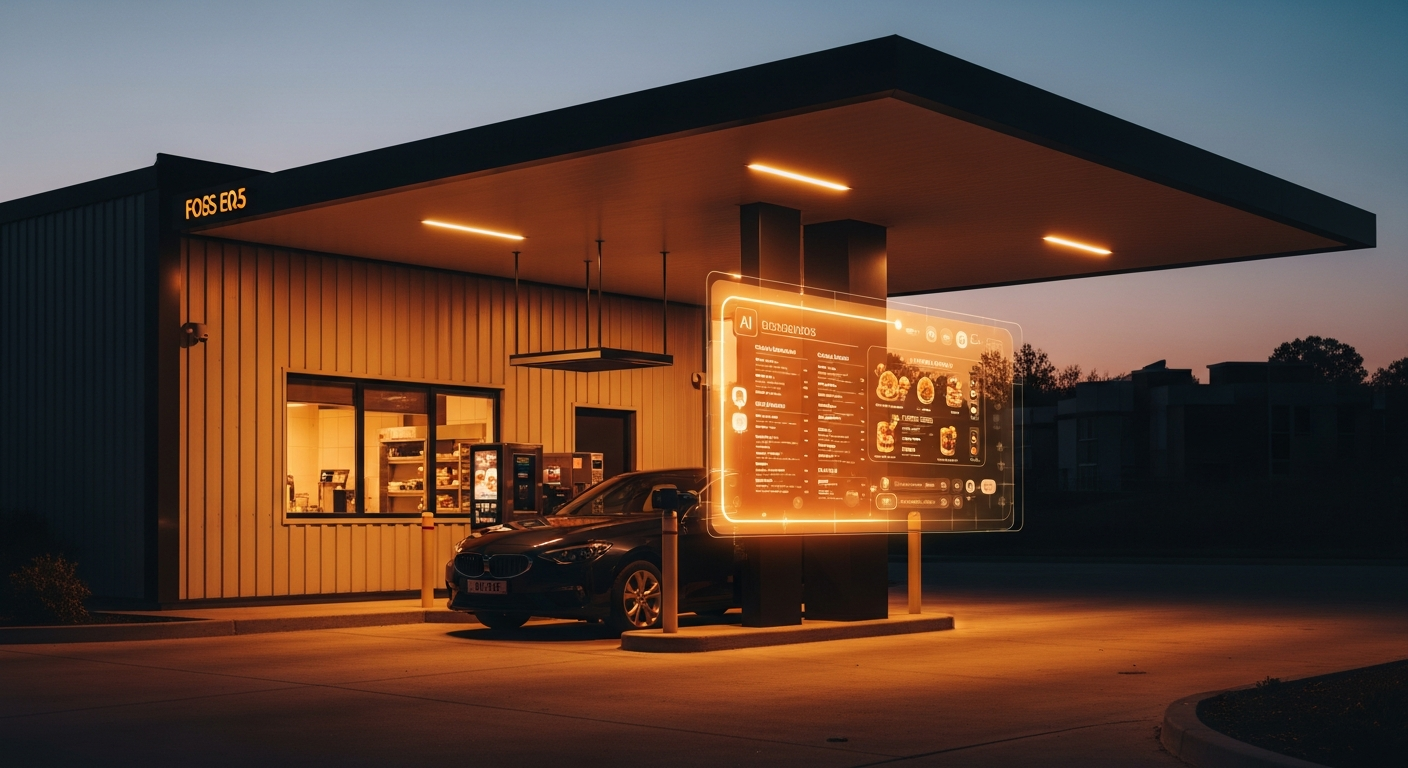
A regional burger chain with 85 locations signed a $90,000 annual contract for AI-powered voice ordering at the drive-thru last year. Six months in, the system handled orders fine. Accuracy was solid. Customers didn't complain. But average check size barely moved, repeat visits stayed flat, and the CFO started asking uncomfortable questions about payback. The technology worked. The strategy didn't.
This is the story playing out across the restaurant industry right now. According to Nation's Restaurant News's 2024 Restaurant Technology Outlook, the average enterprise chain with 50 to 200 locations spends between $50,000 and $150,000 annually on AI ordering technology once you factor in licensing, integration, training, and optimization. The $80K midpoint is common. And 62% of operators plan to invest in AI or automation tools in 2025, up from roughly 45% in 2023, per Toast's 2025 Restaurant Trends Report.
The money is flowing. The question is whether it's flowing to the right places.
The Three AI Investments That Pay for Themselves
David "Rev" Ciancio, Head of Revenue Marketing at Branded Strategic Hospitality, put it bluntly on the Restaurant Unstoppable Podcast in 2024: "I've seen chains spend six figures on AI ordering and get almost nothing back because they didn't integrate it with their loyalty data, their POS, or their marketing stack. AI is not a magic box — it's an amplifier. If your underlying data and guest experience are broken, AI amplifies the mess."
The chains seeing 300–400% ROI over three years (McKinsey's 2024 report, "The State of AI in Restaurants") aren't spreading their budgets thin across every shiny feature. They're concentrating on three areas that have proven, measurable returns.
1. Dynamic upselling in digital channels
AI-powered upselling at the point of order increases average check size by 10–25%, according to Popmenu's 2024 Restaurant Technology Report. That range depends on how well the system is implemented, but even the low end matters when you multiply it across thousands of daily orders.
Rajat Suri, founder and CEO of Presto Automation, made a point in a QSR Magazine interview that sticks: "AI never forgets to upsell. It never has a bad day. It never rushes through a suggestion because there's a line. That consistency alone is worth the investment for most chains."
Hardee's and Carl's Jr. (CKE Restaurants, based in Franklin, TN) deployed Presto's AI voice assistant at drive-thru locations starting in late 2023. Their upsell prompts generated an average of $0.50 to $0.75 in additional revenue per order. At locations processing 300+ drive-thru orders per day, that translated to $150–$225 in incremental daily revenue per store, or roughly $55,000–$82,000 per year per location. The system also achieved 95% order accuracy.
For context, the AI investment per location runs $30,000–$50,000 for hardware and software integration (based on Wendy's disclosed pilot costs). If a single location generates $55,000+ in incremental upsell revenue, the system pays for itself within the first year before you count labor savings.
2. AI-segmented marketing automation
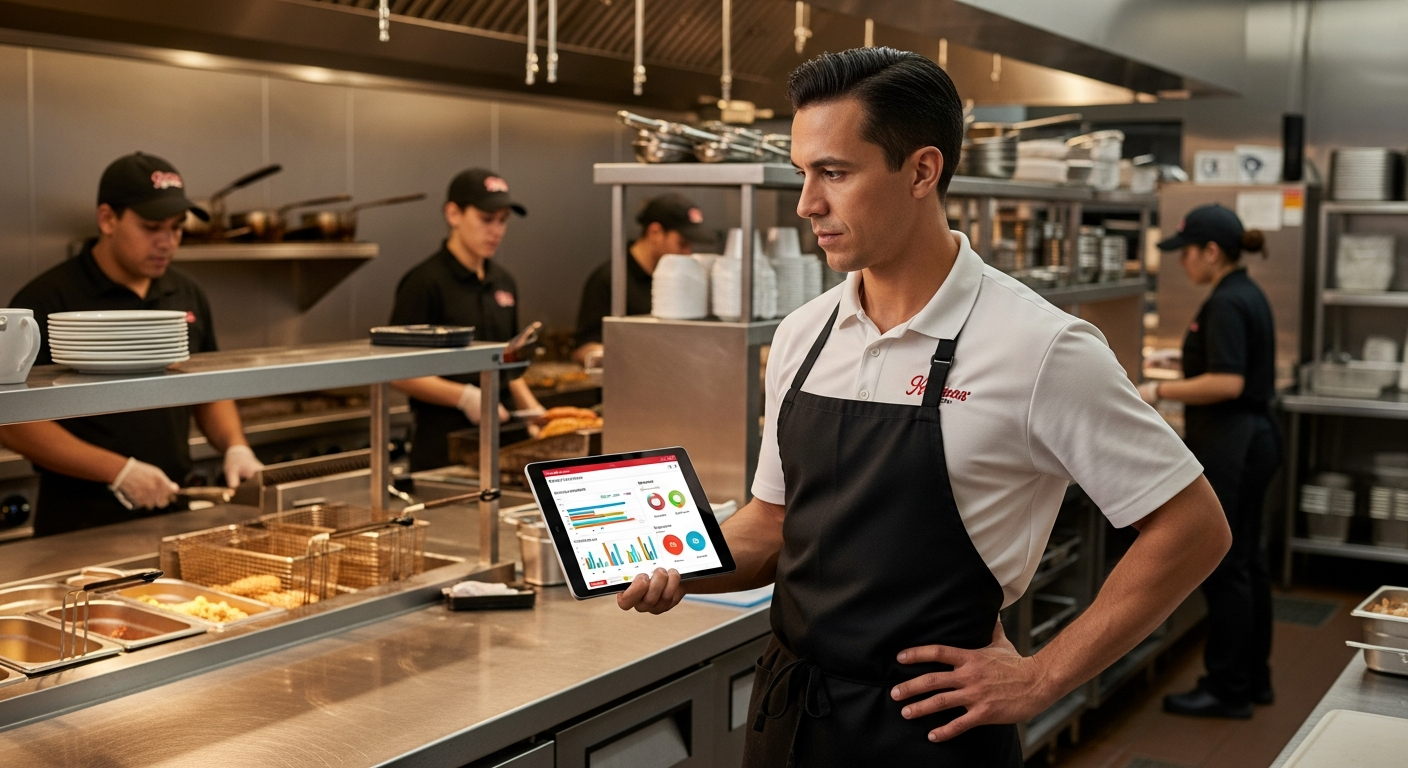
Generic promotional emails have a 20% open rate and a 2–3% click-through rate. AI-driven email campaigns with personalized menu recommendations see a 35% higher open rate than those generic blasts, according to Paytronix's 2024 Loyalty & Engagement Benchmark Report.
The gap gets wider with SMS. AI-segmented SMS campaigns achieve open rates of 98% and click-through rates of 30–45%, per Popmenu's 2024 Marketing Benchmark Data. Those numbers aren't typos.
Andrew Robbins, CEO of Paytronix, said during the company's 2025 Annual Trends Webinar: "Generic digital ordering is table stakes now. The chains pulling ahead are the ones using AI to make every order feel like it was curated for that specific guest. We're seeing 15–20% higher engagement rates when personalization is done right."
AI-personalized loyalty offers see redemption rates of 15–25%, compared to 5–10% for generic offers (Paytronix, 2025 Loyalty Trends). That difference compounds fast. Restaurants with AI-powered loyalty and re-engagement programs reduce 90-day churn by 15–22%, according to the same report.
Consider the math on lapsed customers. AI-personalized re-engagement campaigns increase lapsed customer return rates by 18–25%, per SevenRooms' 2024 data. If you have 10,000 lapsed customers and bring back even 1,800 of them with a well-timed, AI-targeted offer, and each returns for a $16.80 fast-casual check (Toast's 2025 benchmark), that's over $30,000 in recovered revenue from a single campaign.
3. Predictive prep to reduce waste
Chipotle deployed Precitaste's AI kitchen management system for predictive prep forecasting. At pilot locations, food waste dropped by an estimated 10–15%, per Chipotle's 2024 Annual Report and Restaurant Dive's coverage. For a chain doing $3.3 billion in digital revenue alone (37% of Chipotle's total 2024 revenue), even single-digit waste reduction translates to tens of millions in savings.
Smaller chains won't see savings at that scale, but the principle holds. A 100-location chain with $25,000 in monthly food costs per location that cuts waste by 10% saves $3 million annually. That alone can fund the entire AI technology stack.
What AI Ordering Looks Like When Chains Get It Right
Wendy's FreshAI program, built in partnership with Google Cloud, is the most-watched AI ordering deployment in the industry. The company began pilot testing in Columbus, OH in mid-2023 and expanded to over 100 company-operated locations by Q2 2024.
The numbers from the rollout: 86% of orders were handled with full automation, no human intervention needed. The remaining 14% required minor human assist. Upsell attachment rates increased by 15%. Order time decreased by approximately 22 seconds per car.
Twenty-two seconds sounds trivial until you do the throughput math. Presto Automation's 2024 earnings disclosures show that a 22-second reduction in order time translates to approximately 30 additional cars served per day at high-volume locations. At an average QSR check of $11.53 (Black Box Intelligence, Q4 2024), that's $345 in additional daily revenue, or about $126,000 per year per location.
Wendy's CEO Kirk Tanner stated on the Q1 2025 earnings call that AI ordering locations showed "measurable improvement in throughput and customer satisfaction scores." Kevin Vasconi, Wendy's former Chief Digital & Technology Officer, framed the labor impact at the 2024 MURTEC Conference: "We're not replacing people — we're redeploying them. The AI handles the repetitive order-taking so our team can focus on hospitality, accuracy, and speed of service."
White Castle took a similar approach, partnering with SoundHound AI to deploy voice ordering at over 100 drive-thru locations by mid-2024. Their AI handled approximately 90% of orders without human intervention and increased peak-hour throughput by 10–15%. VP Jamie Richardson said the technology "frees up our team members to focus on food quality and hospitality."
The Personalization Gap: Where the Biggest Revenue Lift Hides
Drive-thru voice AI gets the headlines. The bigger proven payoff sits in personalization across digital ordering channels.
Panera Bread integrated AI-powered personalization into their digital ordering platform and loyalty app, using past order history, time of day, weather, and trending items to surface recommendations. Digital sales exceeded 50% of total revenue by mid-2024. Personalized AI recommendations contributed to a 5–8% increase in average digital check size. Their loyalty program surpassed 52 million members, with AI-driven engagement credited for a 20% improvement in 90-day retention rates.
Wingstop pushed even further. Digital sales reached 68.3% of total sales in Q4 2024, one of the highest percentages in QSR. AI-driven personalized offers contributed to same-store sales growth of 19.9% in fiscal 2024. Average unit volumes exceeded $2 million, up from $1.6 million two years prior. CEO Michael Skipworth credited their "digital-first, AI-enhanced" strategy as a core growth driver.
Domino's, a long-time AI adopter, reported that personalized AI upselling in their app contributed to a $2–$3 increase in average digital ticket compared to non-personalized orders. Digital channels accounted for over 85% of total U.S. delivery orders in 2024.
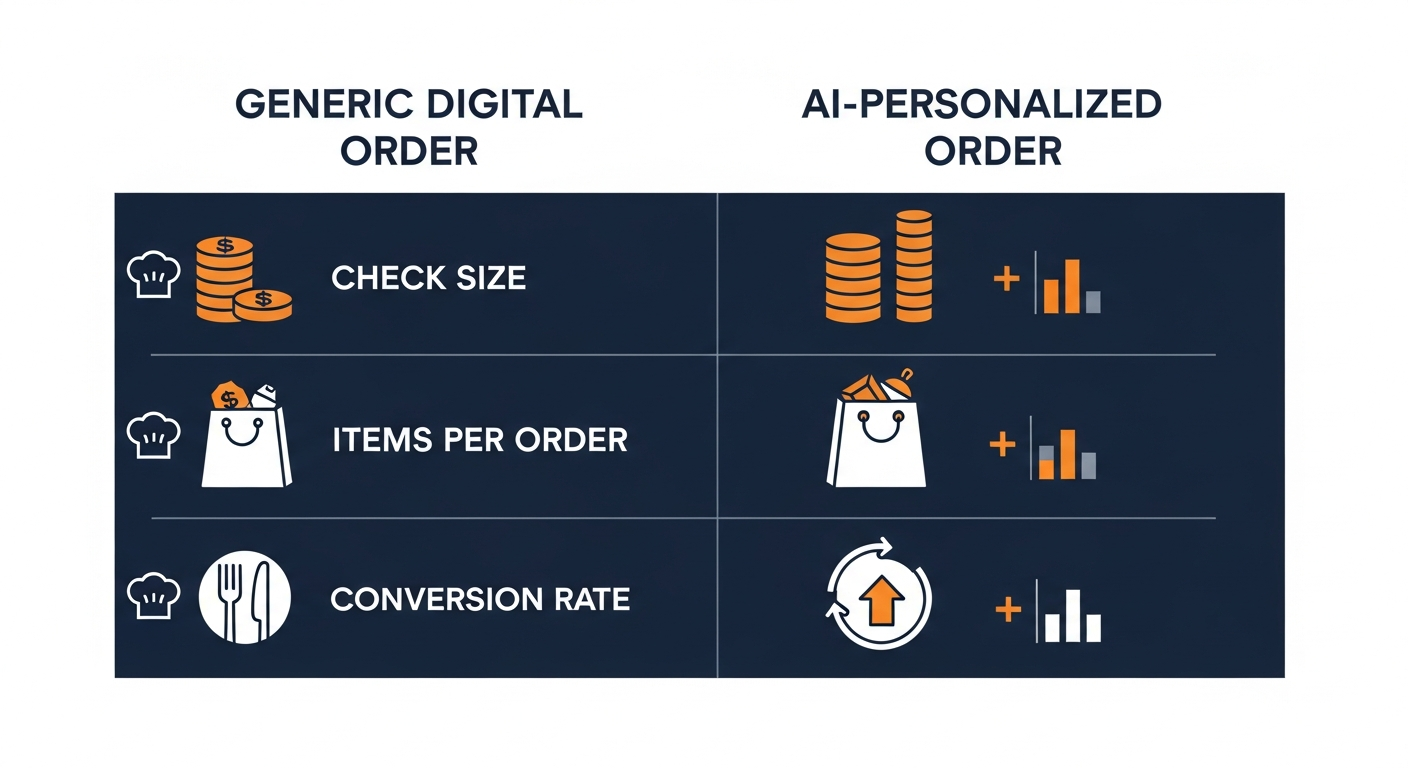
Olo's 2024 platform data shows the pattern across the industry: AI-personalized menu recommendations drive a 12–18% increase in items per order, and restaurants with AI-optimized digital ordering see 15–20% higher digital order conversion rates compared to static menus.
Noah Glass, founder and CEO of Olo, made this observation at the 2024 Nation's Restaurant News Tech Summit: "The restaurants seeing the best ROI from AI aren't just automating order-taking — they're using AI to personalize every touchpoint, from the menu board to the loyalty offer to the re-engagement text. That's where the real revenue lift comes from."
What This Means for Independent and Mid-Size Operators
The cost barrier is falling. Brendan Sweeney, CEO of Popmenu, told Restaurant Dive in 2024: "The cost of AI ordering tools has dropped dramatically. What used to be a $100K enterprise play is now available to independents for $200–$500/month through platforms like Popmenu, Toast, and Olo. The gap between chains and independents is closing faster than people think."
Slutty Vegan, founded by Pinky Cole in Atlanta, deployed AI-powered ordering kiosks and an AI-optimized online ordering system as the brand expanded from 1 to 10+ locations. AI kiosks reduced average order time by 40% compared to counter ordering. Upsell prompts on kiosks increased average check by approximately 12%. Digital and kiosk orders carried a 22% higher average ticket than traditional counter orders.
For an independent or small chain, the decision framework is straightforward. Start with the investment that has the fastest, most measurable payback:
If you do heavy drive-thru volume (300+ orders/day): Voice AI ordering pays back through throughput and upsell revenue. Budget $30,000–$50,000 per location and expect payback within 8–14 months based on the Hardee's/Carl's Jr. and Wendy's numbers.
If most of your revenue is digital ordering: AI-powered menu personalization and dynamic upselling should come first. The 12–22% check lift on digital orders (Olo, 2024) is the highest-ROI AI application available, and it costs a fraction of drive-thru hardware.
If you're fighting customer churn: AI-segmented marketing and loyalty personalization reduce 90-day churn by 15–22% and increase customer lifetime value by 25–40% over 12 months (Paytronix, 2025). Given that acquiring a new customer costs $10–$15 via digital ads versus $1.50–$3.00 to retain one through AI-driven loyalty (Square, 2024 Future of Restaurants Report), retention-focused AI has the clearest payback for operators who already have a customer base.
The $80K Question: Where Should Your First Dollar Go?
Most chains spending $80K on AI ordering are splitting the budget across too many features at once. The operators getting the strongest returns are sequencing their investments: personalization and upselling first (because they generate revenue immediately), marketing automation second (because it compounds over months), and voice/kiosk automation third (because it requires hardware and has a longer payback window).
AI-powered loyalty program integration increases customer lifetime value by 25–40% over 12 months, per Paytronix's 2025 Loyalty Trends Report. AI-optimized onboarding flows improve first-order conversion by 15–20%, according to Olo's 2024 data. AI-driven push notification personalization improves 30-day app retention by 20–30%, per Braze's 2024 Customer Engagement Report for the restaurant vertical.
Stack those three improvements together and the revenue impact dwarfs what you'd get from a standalone voice ordering system. The voice system might save you 1.5 to 2.5 FTEs per location in order-taking roles (McKinsey, 2024), worth $35,000–$75,000 in annual labor savings depending on volume. That matters. But the personalization layer can lift total digital revenue by 8–15% across every location, every channel, every order. For a 100-location chain doing $1.5 million per unit, a 10% digital revenue lift on the 40% of revenue that's digital (Paytronix, 2025 Order & Delivery Report) equals $6 million in annual incremental revenue.
That's the math that separates the chains getting 300%+ ROI from the ones wondering why their expensive AI system isn't moving the needle.
See How Menuro Fits Into Your AI Ordering Strategy
Menuro gives independent and mid-size restaurants a direct digital ordering channel with built-in personalization, loyalty tools, and marketing automation, without the six-figure enterprise price tag. If you're weighing your next technology investment and want to see how a commission-free platform can deliver the kind of AI-powered upselling and retention that the big chains are spending $80K+ to build, book a demo at menuro.io/demo.